

From farm to school: Local districts receive grant money for agriculture education
Courtesy of Heather Nicholson
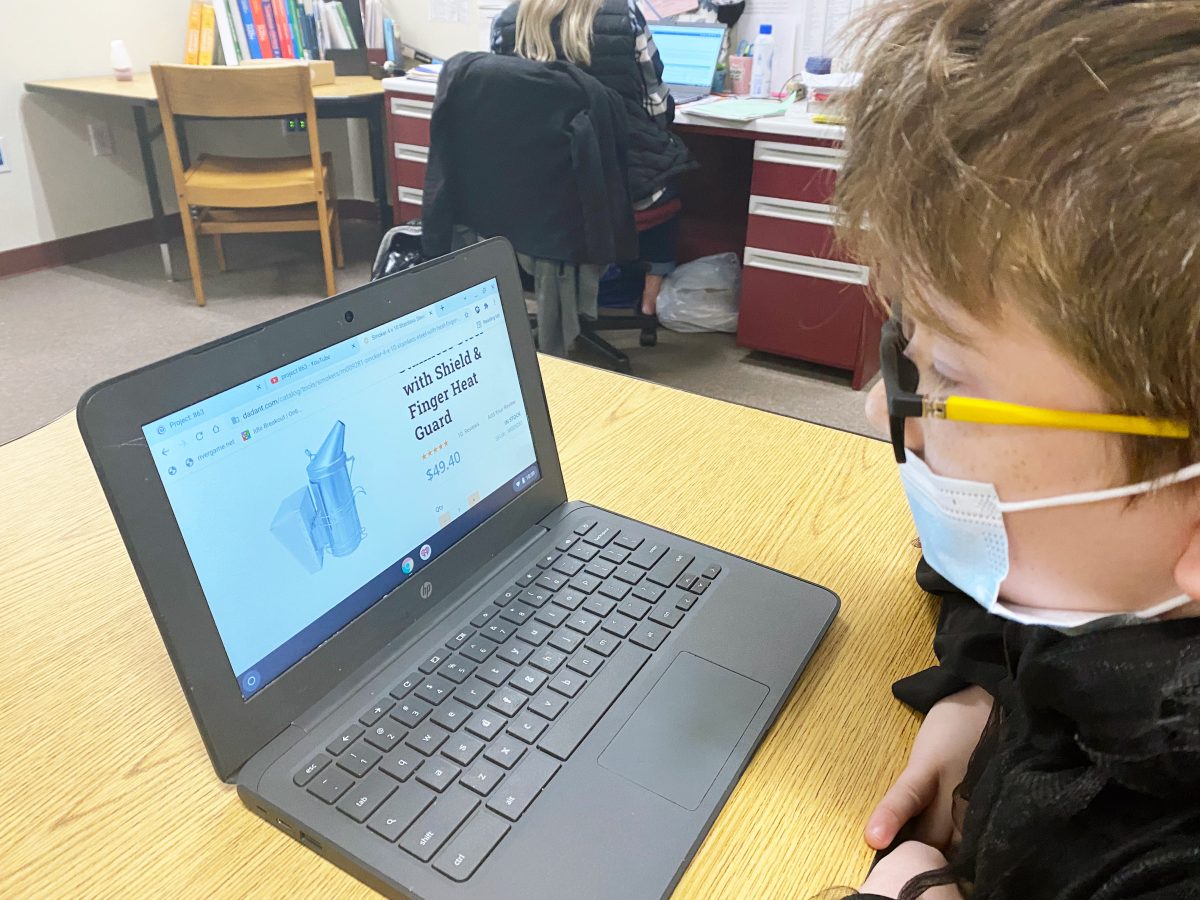
Gavin Jae, a seventh-grader at California Area School District, will lead the beekeeping project funded through Farm to School.

Courtesy of Heather Nicholson
Seventh-grader Gavin Jae searches for beekeeping suits online in preparation for California Area School District’s agricultural course, funded through Farm to School. Students will design and construct bee hives this winter and raise bees in partnership with a local farm next spring.
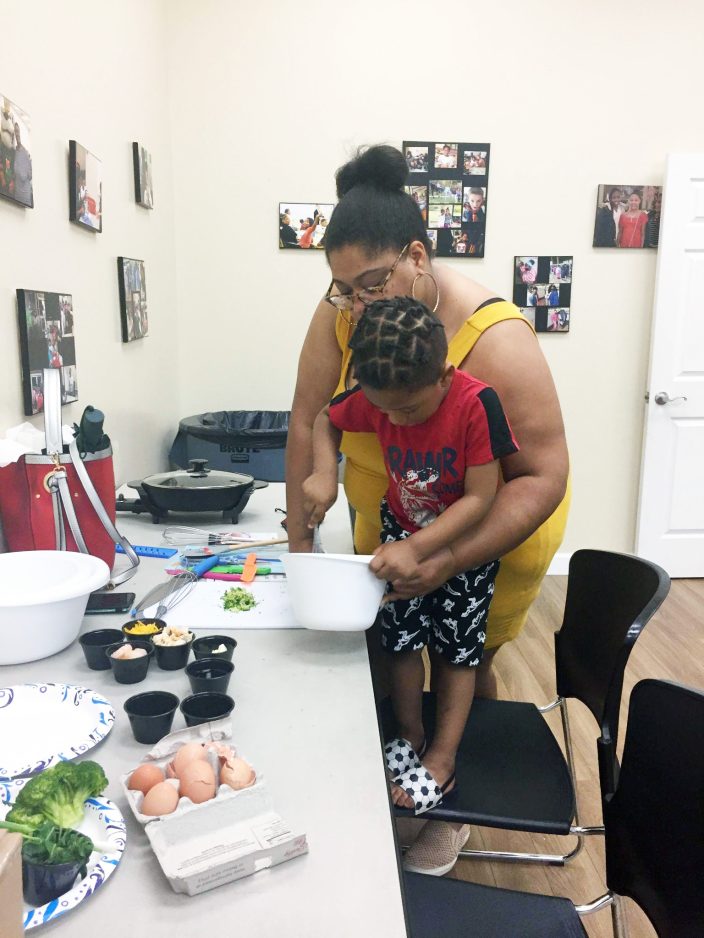
Shaniqua Williams helps Little Legends preschooler Evan Williams cook omelets at East End United Community Center's Farm to School cooking class last year. The center partnered with Red Range Farms as part of a grant program. The local farm provided eggs for these omelets.
Courtesy of Steve Strange
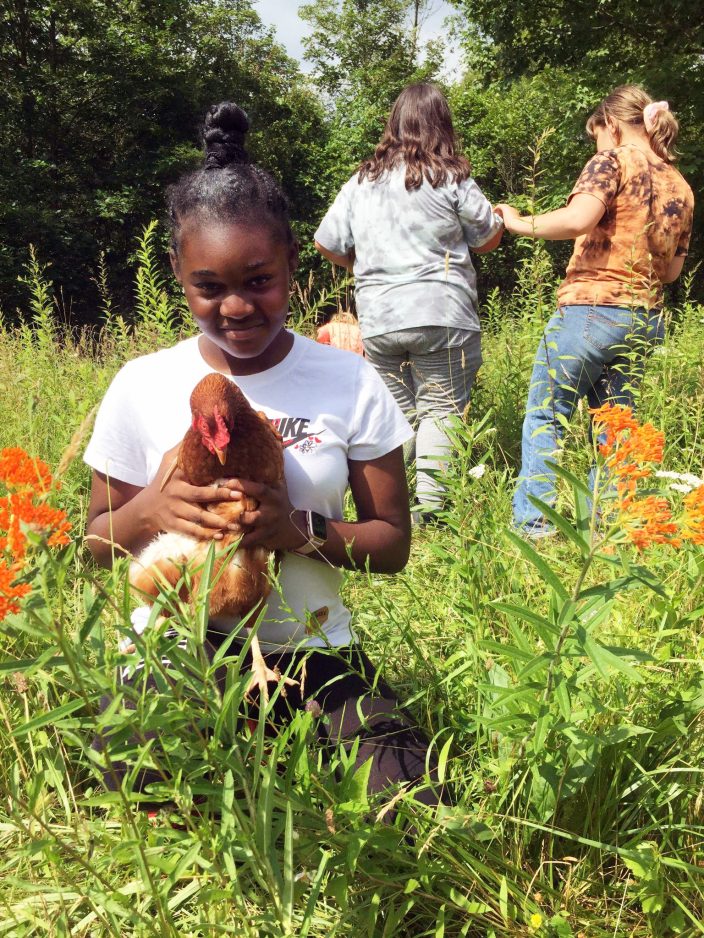
Seventh-grader Rhianna Powell poses with a chicken at Footprints Farm in Fayette County last year during a field trip with East End United Community Center. EEUCC was recently awarded a Farm to School grant that will allow the center to continue the agricultural programming begun last year through grant funding.
Courtesy of Steve Strange
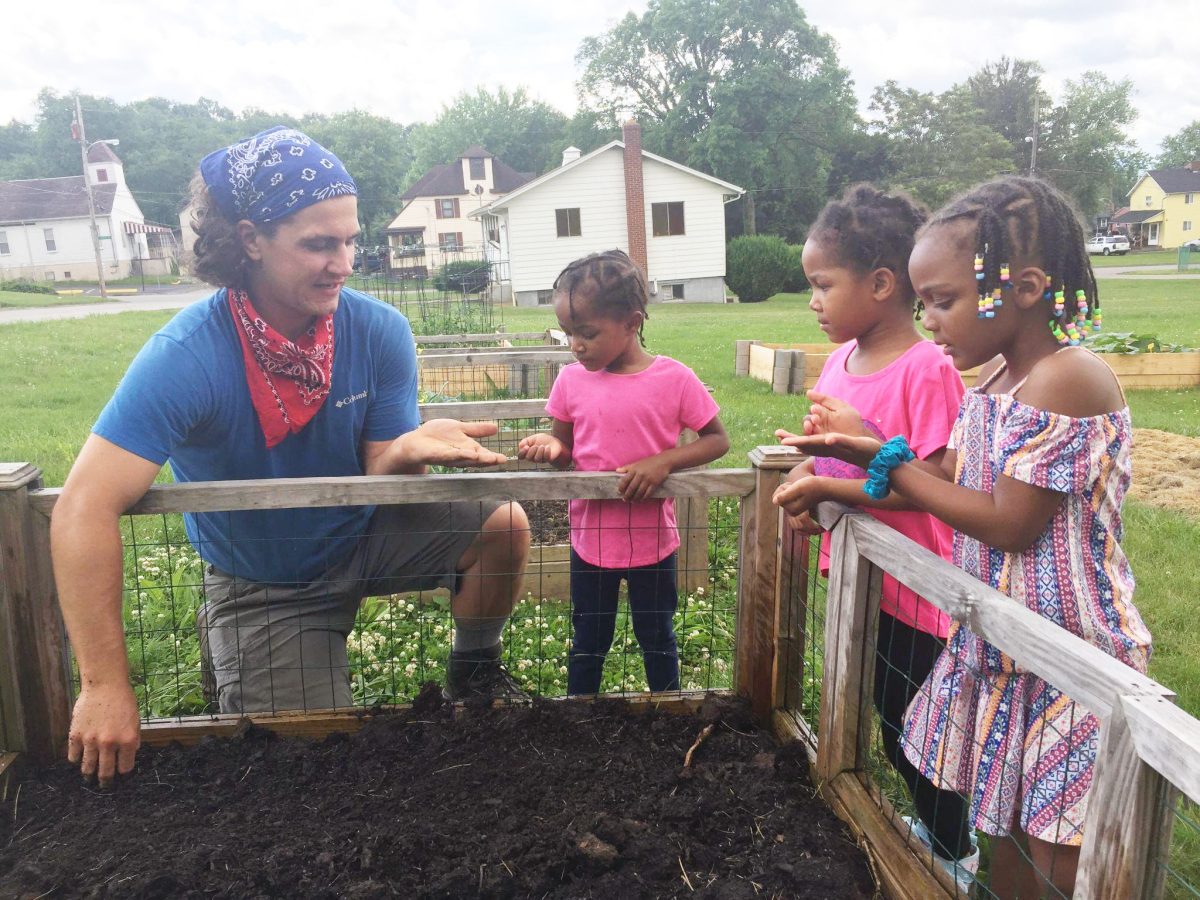
Apollo Stratemeier, youth gardening facilitator at EEUCC, teaches Little Legends preschoolers about growing fresh produce at a program funded through the DOA Farm to School grant. Raji Hunter, left, Dayona Hunter and Za’kiya Ramsey enjoyed the hands-on learning.
California Area School District and Washington School District are two of 48 learning institutions throughout the Commonwealth to receive funding from the Pennsylvania Department of Agriculture’s Farm to School Grant Program.
Last week, the DOA announced that in addition to California and Washington school districts, Intermediate Unit 1 in Washington County and East End United Community Center in Fayette County were also awarded funding.
The Farm to School Grant Program annually awards a total of $500,000 to Pennsylvania school districts, charter and private schools for projects that encourage students in grades K-5 to learn more about local food systems and take an active role in shopping and eating locally.
Awards are given in amounts up to $15,000.
California Area School District received $15,000 for development of poultry and pollinator curriculum.
Last year, the district received funding through Farm to School and used that grant to partner with Red Range Farms, said Superintendent Dr. Laura B. Jacob.
“They provided us fertilized eggs. The kids hatched the eggs; some took them home, some gave them back to the farm,” said Jacob. “They provided the instruction for our students, as well as support for our educators. It was so successful. The kids absolutely loved that experience raising the chicks from the eggs.”
Following that success, California Area is expanding and adding to the program using this year’s grant.
“We really want to educate kids on how critical our bees are,” said Jacob, who said students will spend this winter designing and building bee hives. “Bees help us, are critical in agriculture. Agriculture is our No. 1 industry in Pennsylvania. In the spring, we’ll actually work with a local farmer who will provide us with some of her own … queens and get us started.”
While California Area raises chickens and bees, Washington School District will use its $2,200 grant to implement a healthy eating program for its pre-K through fifth-graders.
“Our project is to promote fruits and vegetables from local farms,” said Kimberly Smith, supervisor of accounting and transportation, who worked on the grant with cafeteria secretary Karen Tarentino.
The district is partnering with Monteverde’s Produce, who will deliver fresh fruits and vegetables for students to try while they complete educational activities about the produce.
When Washington School District had a similar fruits and veggie program years ago, Smith said, “It was surprising, after a while, to see the children eat something that I thought they would never touch in a million years.” She said it’s important to offer students healthy foods they may not have access to at home and expose them to different kinds of fruits and vegetables.
According to the DOA’s grant list, Intermediate Unit 1, which provides special services like staff development and English as a second language to school districts throughout Washington and Greene counties, will use its $8,303 grant to teach students farming through hydroponics and cold frame boxes.
Students at IU1 will also sharpen their culinary skills through cooking demonstrations throughout the school year.
In Fayette County, the East End Community Center is putting its grant money to use by planting a school farm and taking agriculture-themed field trips.
“We had the Farm to School grant over the summer. It went really well,” said executive director Steve Strange. “(The kids) loved the hands-on assignments. It’s one thing to talk about gardening, but when you can walk outside the building and pick the vegetables and taste the vegetables … see exactly how the entire process comes about, I don’t know if there’s any substitute for that.”
EEUCC received $15,000 to fund experiential learning. Over a six-month period, students will take field trips to local farms, including Triple B and Red Range farms. In the days leading up to each field trip, students will complete lessons centered around the upcoming farm or garden visit to maximize the learning experience.
“I think (agriculture) is a portion of our culture that is taken for granted and kind of pushed to the back burner,” Strange said. He added EEUCC will use some of the grant money to serve students healthy, locally sourced food.
“It’s really tough to sometimes eat nutritious foods, and I think that’s a big staple of this program,” he said.