

Mail-in ballots delaying final school, municipal race counts in Washington County
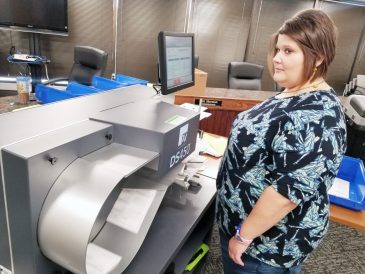
The winners of numerous tight races for school board and municipal government across Washington County might not be determined until later this week due to an “unprecedented” number of overvotes for the candidates in the government study commission question.
Hundreds of mail-in votes cannot be tallied until the county’s election canvass board meets at 9 a.m. Friday to review the ballots in which many people accidentally selected 12 candidates instead of the maximum of 11.
While the government study commission was overwhelmingly defeated during Tuesday’s election, voters could subsequently choose 11 out of a list of 51 candidates to sit on the 11-person board if it had been approved. Since the referendum was defeated, that board won’t convene and that race between the candidates is now moot. However, with so many people erroneously choosing more than the allowed number of candidates – an action called “overvoting” – the counting process will be delayed for other races on that same ballot.
“It was an unprecedented question, and it was an unprecedented overvote situation,” Elections Director Melanie Ostrander said about the unusual nature of the government study commission vote requiring people to pick so many candidates.
Nearly 1,000 mail-in ballots still have to be counted, and Ostrander and other election officials were working Wednesday morning to determine how many must wait until the canvass board’s meeting. Of that number, about 250 were mail-in votes that arrived Tuesday before the 8 p.m. deadline, but were being processed and counted Wednesday.
But hundreds of other ballots either had overvotes or unclear markings that the scanning machine could not count.
Elections workers were separating mail-in ballots into various bins Wednesday to give the canvass board an easier time figuring out what flaw there is with the vote and how to cure the ballot or rule on voter’s selections.
“This is the most (overvotes) I’ve seen since I became director,” Ostrander said of her time leading the elections office beginning in 2019.
The ballots are from precincts all across Washington County, so there is no clear way to establish winners in many close school board and municipal elections until the canvass board individually counts each one and tallies the votes for the other races.
For example, only one vote separates Democrat Thomas Brown and Republican Kara Shaw-Dearth for the final seat on Bentleyville Borough Council. A similar situation happened in California, where Republican John Frank leads fellow Republican Frank Stetar by one vote for the final seat on borough council. In Washington, registered Democrat Joseph J. DeThomas led Republican Dheaven J. Kelley by only six votes out of 2,727 votes for the last seat on City Council.
Numerous other races are equally as close, meaning it will take some time to determine the winners.
“There are other races we need to count,” Ostrander said.
None of the countywide races is in question since all of their winning margins are well beyond the number of mail-in ballots left to count.
Republicans swept the three row offices, with Tony Andronas winning the race for sheriff, April Sloane winning the office of controller and Carrie Perrell defeating incumbent Debbie Bardella for recorder of deeds.
But the biggest defeat Tuesday was for the government study commission itself, which was met with disapproval by Democrats, Republicans and independents, as it was rejected by a 70 to 30% margin.
The Washington County Republican Party was the biggest opponent of forming the government study commission and has urged people to vote against it for months. Party Chairman Dave Ball said it was clear the commission would be defeated when mail-in ballots, which are overwhelmingly from Democratic Party voters, came in against the referendum during early returns.
“We were opposed to it from the beginning,” Ball said. “We don’t understand why (county commissioners) Diana Irey Vaughan and Larry (Maggi) wanted to do it because they’re the only two who wanted it. There was no public outcry for it. We told them that and they insisted on going ahead.”
Irey Vaughan, the Republican chairwoman leading the board, and Maggi, a Democrat, voted in late July to place the question on the ballot, while Republican Commissioner Nick Sherman voted against it. Ball thinks the issue is now dead, pointing to the last study commission that convened in 2001 and decided against making any changes.
“It’s been tried and defeated. … It’s not a seller. It was a non-starter,” Ball said. “When it lost in mail-in, there was no hope for it.”
Irey Vaughan, who pushed for the referendum over the summer, said she wasn’t surprised by the outcome after hearing comments in the community and at various county meetings.
“There was a narrative from early on that was placed before the public that had great inaccuracies, but that narrative caught hold, and we heard it at the polls,” she said.
But Irey Vaughan added that she stands by her decision to place the question on the ballot to give voters the power to ultimately decide whether to reform the county’s government.
“Giving voters the opportunity to participate more in the process is a good idea,” Irey Vaughan said. “So I still feel good that we allowed the voters to decide.”