

Bridging the gap: Local teens collaborate with counterparts in Africa
Courtesy of WHS Teen Outreach
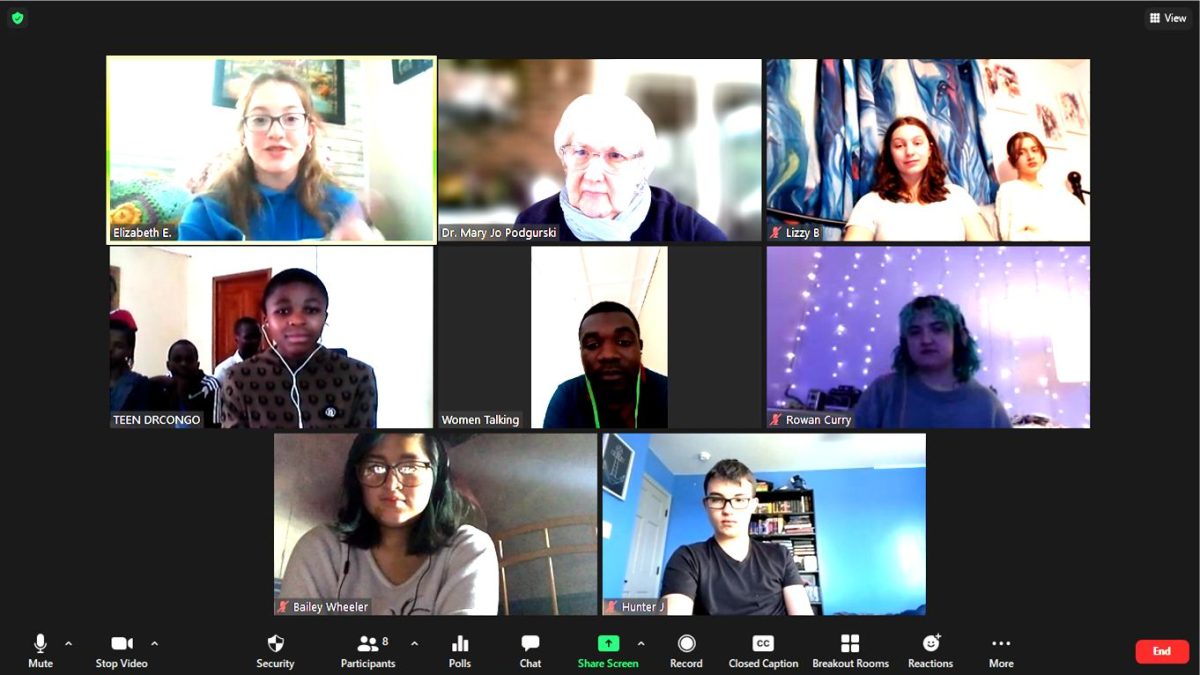
Peer educators from Washington Health System Teen Outreach have been collaborating with teens from the Democratic Republic of the Congo on a project promoting respect and self-worth.
Courtesy of WHS Teen Outreach
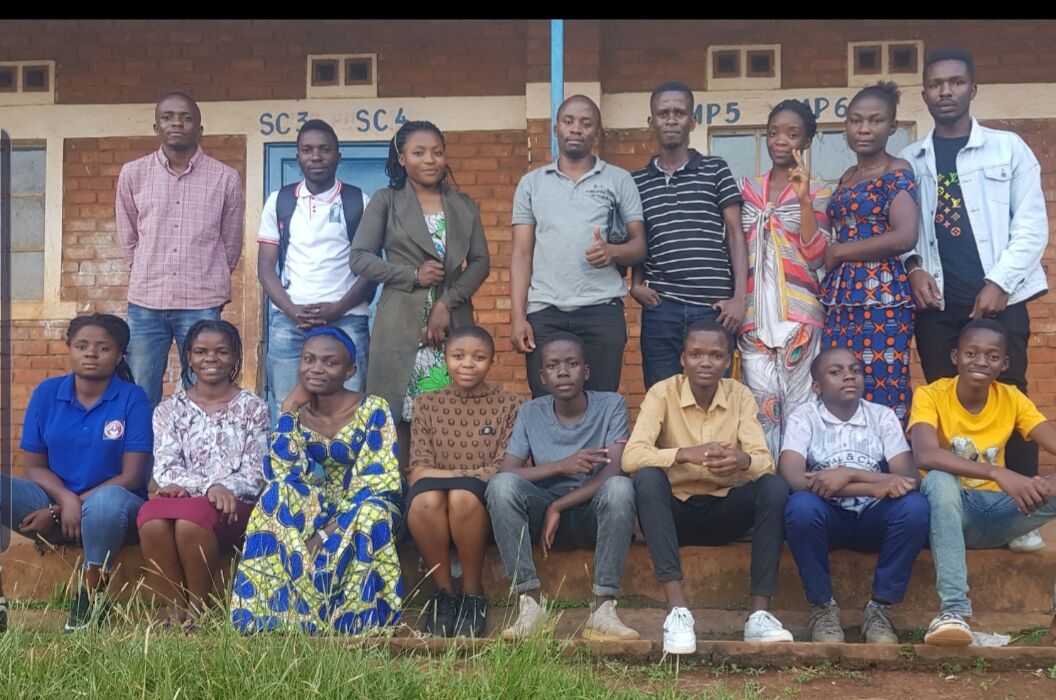
Pictured in the bottom row are the eight students from Democratic Republic of the Congo who are meeting via zoom with eight peer educators from Washington Health System Teen Outreach.
Usually at 9 a.m. on a Saturday, Elizabeth Engle, a freshman at Trinity High School and a peer educator for Washington Health System Teen Outreach, might still be asleep.
But this Saturday, Engle and seven other peer educators gathered at Common Ground Teen Center in Washington to participate in an hourlong Zoom conversation with a group of teens from the Democratic Republic of the Congo.
The internet connection was spotty and lagging, and the teens worked around a language barrier – the DRC teens speak French and Swahili – but Engle said she wouldn’t pass up the chance for what she called a “once-in-a-lifetime opportunity.”
“It’s just an awesome experience, and I wouldn’t trade it for anything in the world. I don’t mind losing a little sleep to be a part of this,” said Engle, with a laugh.
The meeting was the second between the Teen Outreach young adults and the African teens, who are collaborating to develop a curriculum about respect and self-worth that the teens will teach to younger teens and children in both countries.
The project, Peer Education Africa/America Connection, was coordinated by Dr. Mary Jo Podgurski, director of WHS Teen Outreach, after she spoke at a peace conference for about 500 teens hosted by the Central African country.
Following the event, Podgurski – who started peer education in 1995 and has trained more than 15,000 young people to teach since then – was asked by the conference organizers to facilitate a meeting between the peer educators and the DRC teens.
Podgurski saw the collaboration as an opportunity for the teens to learn about how much they have in common, even though they live more than 7,000 miles apart.
She also wants the teens to learn about each other’s cultures.
“It’s about perspective. The world seems really big, but when you meet other humans in other places, it’s always eye-opening to see how much we’re the same,” said Podgurski. “We want to find commonality between our young people.”
During the meetings between the two groups of teens, technical issues cropped up.
While Teen Outreach kids each used a laptop, the eight teens in Africa all shared one computer and one set of headphones.
And the interpreter who bridges the language gap cost $100 per session.
So, the peer educators decided to hold a fundraiser to purchase four laptops and a speaker for the teens in DRC, and to pay for an interpreter for upcoming sessions. The community so far has donated more than $2,800 to the project.
“The kids were thrilled about the fundraiser, and that so many people in the community who don’t even know them are helping them continue this,” said Podgurski.
The teens plan to meet weekly until June, then will meet monthly during the summer months before resuming weekly Zoom meetings (there is a six-hour time difference).
The teens from Africa also are excited about the project. Several of them walk long distances to a school to participate in the 3 p.m. Saturday sessions.
The teens are in the beginning stages of getting to know each other, and have been sharing their interests, how they spend their time, what they have in common, and how their lives differ.
Engle said she and her American peers were surprised when their counterparts told them girls in the DRC are not allowed to whistle or to wear mini-skirts.
“We’re definitely learning about what their lives are like. They’re all really nice. They are just like regular teens in middle school and high school. They all have their own struggles and so do we,” said Engle. “We are connecting with them and sharing our experiences, and seeing how they’re just like us, and it’s awesome.”