

Russian invasion of Ukraine discussed at W&J
Courtesy of Washington & Jefferson College
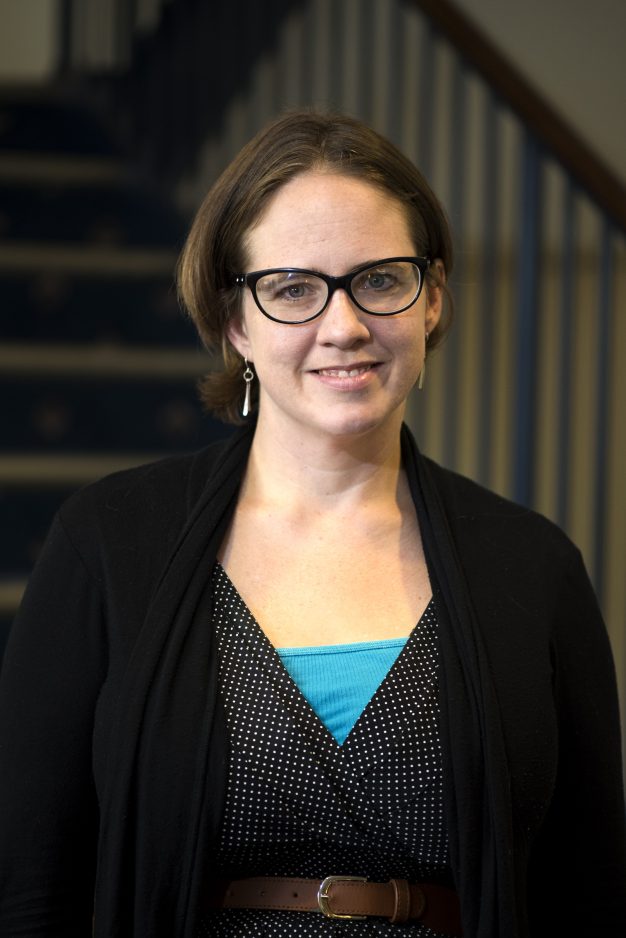
Susan Vdovichenko
Paul Paterra/Observer-Reporter
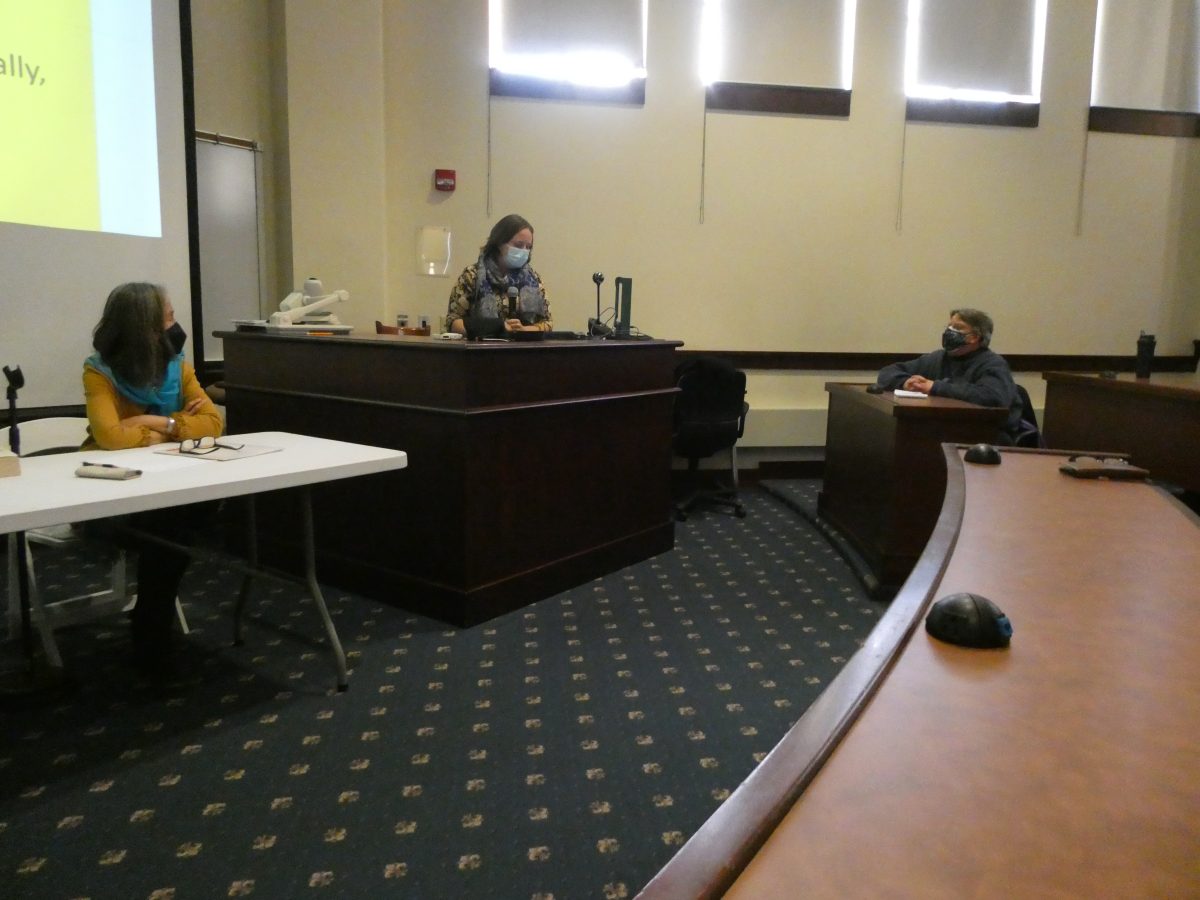
Dr. Susan Vdovichenko, assistant professor of Russian at Washington & Jefferson College, addresses the audience during panel discussion at the campus on the Russian invasion of Ukraine.
Paul Paterra/Observer-Reporter
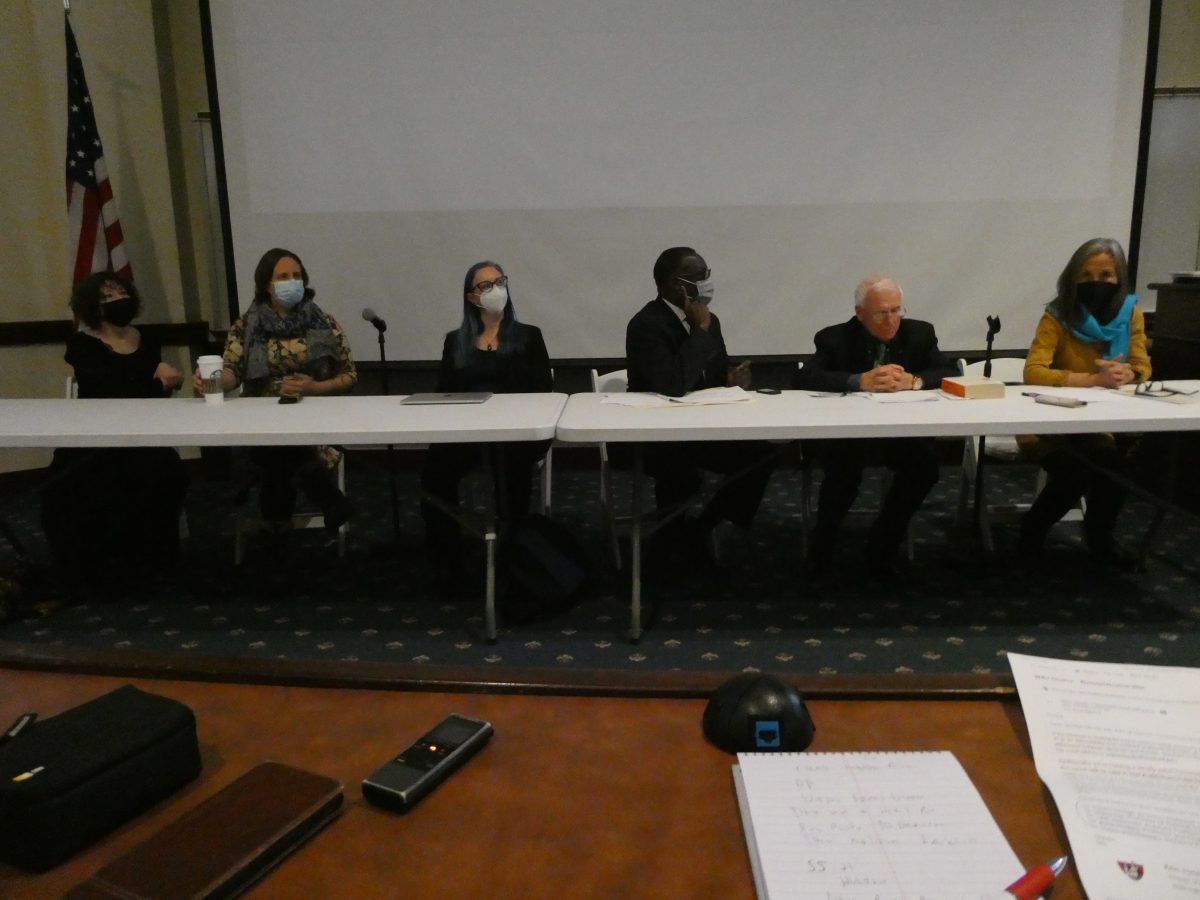
Panelists for a discussion on the Russian invasion of Ukraine held Thursday at Washington & Jefferson College listen to a question from the audience. From left are Dr. Olga Solovieva, associate professor and director of religious studies; Dr. Susan Vdovichenko, assistant professor of Russian; Dr. Leah Goldman, assistant professor of history; Dr. Buba Misawa, professor and chair of political science; Dr. Robert Dodge, emeritus professor of history, and Dr. Zheya Gai, professor of political science.
Paul Paterra/Observer-Reporter
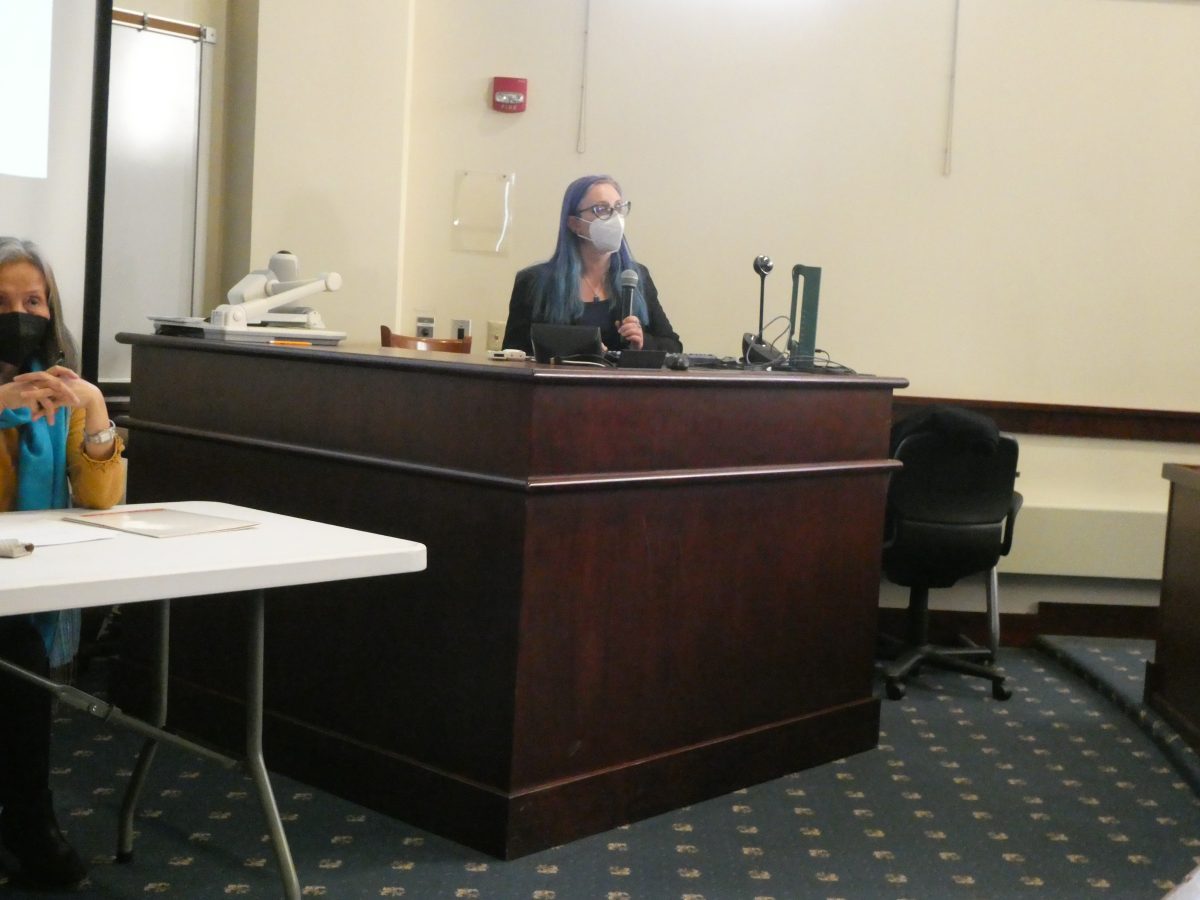
Dr. Leah Goldman, assistant professor of history at Washington & Jefferson College, speaks during a panel discussion concerning the Russian invasion of Ukraine held Thursday at the college.
Washington & Jefferson College professors participating in a panel discussion addressing the Russian invasion of Ukraine do not expect a quick end to fighting.
Thursday’s discussion at W&J’s Yost Auditorium in the Howard Burnett Center drew a capacity crowd of students and staff alike.
Panelists were Dr. Robert Dodge, emeritus professor of history; Dr. Zheya Gai, professor of political science; Dr. Leah Goldman, assistant professor of history; Dr. Buba Misawa, professor and chair of political science; Dr. Susan Vdovichenko, assistant professor of Russian, and Dr. Olga Solovieva, associate professor and director of religious studies.
The panel touched on various aspects of the invasion, which Gai referred to as a “sad event,” an event resulting in more than 2,000 civilian deaths since it began Feb. 24, according to some news services.
Misawa said Russian President Vladimir Putin’s motivations for the attacks include Russia’s proud history and traditions of totalitarianism, centralized power and sense of special destiny; his desire for western recognition of a Russian sphere of influence, and Russia’s pursuit of great power status and willingness for large military spending.
“I think that’s never going to diminish,” Misawa said. “They’re willing to spend as much (as it takes).”
Goldman said the war has had a human cost. Obviously, Ukrainian citizens are suffering, but Goldman said Russian citizens also are affected.
Economic sanctions levied by international and national bodies will have an effect on the Russian citizenry. The ruble has been devalued even more, the Russian stock market is in a steep decline and assets have been frozen.
Some Russian citizens are protesting the war. Goldman said more than 7,000 protesters were arrested between Feb. 24 and March 2, with the number approaching 8,000. The Garage Museum of Contemporary Art in Moscow has ceased operations until the war is over.
“People who are paying the price are ordinary Russians,” Goldman said. “They are the ones who are going to pay the long-term economic costs and social costs. Communication between Russian citizens and citizens of the West has essentially been cut. Russians aren’t happy. Russians don’t want this war. Russians don’t understand why this war is happening. They are not convinced this war is necessary.”
Goldman explained that the Russian media is controlled to the point where terms like “war” and “attack” are forbidden to be used, instead replaced by terms such as “special military operation.” Some media organizations have been banned from broadcasting for using forbidden terms.
“Any person who is a prominent figure in civil society cannot operate,” she said.
Vdovichenko admitted she was a biased speaker and spoke with passion about what she referred to as a “terrible situation.” She lived in Kherson, a city in Ukraine, for a couple of years, and her husband is Ukrainian.
She said Putin has referred to Ukraine as Little Russia.
“The way he presents it is that the Ukrainians are nothing but unsophisticated, poorer, more stupid Russians,” Vdovichenko said. “In Putin’s mind, these are Russian citizens or they used to be Russian citizens with Russian blood, Russian language… (He said) there are Nazis running around performing genocide on Russians within Ukraine and he has to protect them.”
But she said that’s not quite what Ukrainians are.
“These people are not stupid, slow Russians,” Vdovichenko said. “They are Ukrainians and they know it.”
She asked the audience to think: Would Putin attack a place like Brighton Beach, N.Y., where there are many Russian speakers, or another area of United States where there are people who speak a language not native to the country?
“It’s the same motivation,” Vdovichenko said.
Panel members do not expect a quick end to the invasion.
“The conflict between Russia and Ukraine will be protracted,” Misawa said. “Russia’s pursuit is a matter of national identity. That identity cannot be diminished. Russia will attack Ukraine until Ukraine is forced to negotiate.”
“He is not going to stop until he gets demilitarization of Ukraine and significant portions of the land,” Vdovichenko added. “My guess is he’s not going to stop until he gets everything he has asked for.”
Dodge foresees more involvement in this conflict.
“I do not see, if this war continues, how NATO and the United States are going to be able to stay out of it,” he said.