

Elections officials in ‘limbo’ after dueling court rulings on undated mail-in ballots
Mike Jones/Observer-Reporter
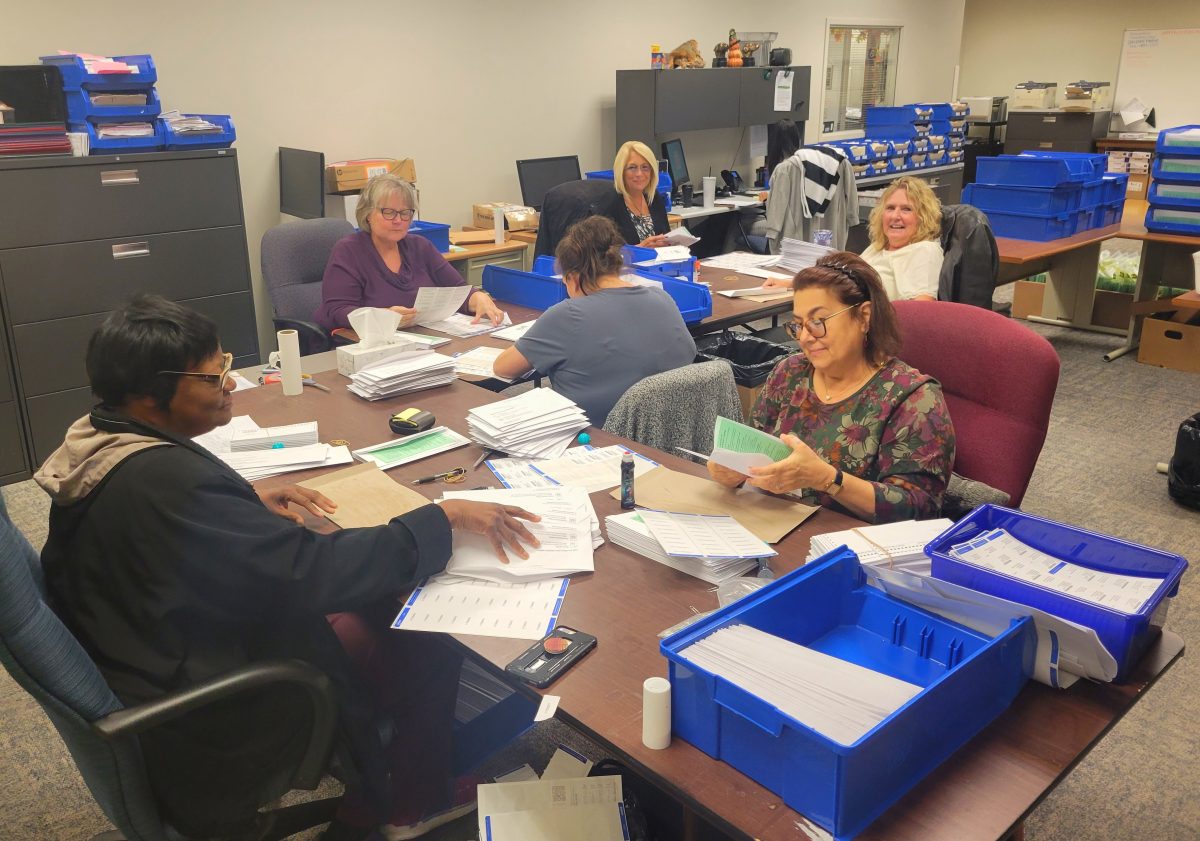
Washington County Elections Office workers are shown Oct. 4 preparing absentee and mail-in ballots to be sent out to voters who requested them ahead of the Nov. 8 general election.
Submitted
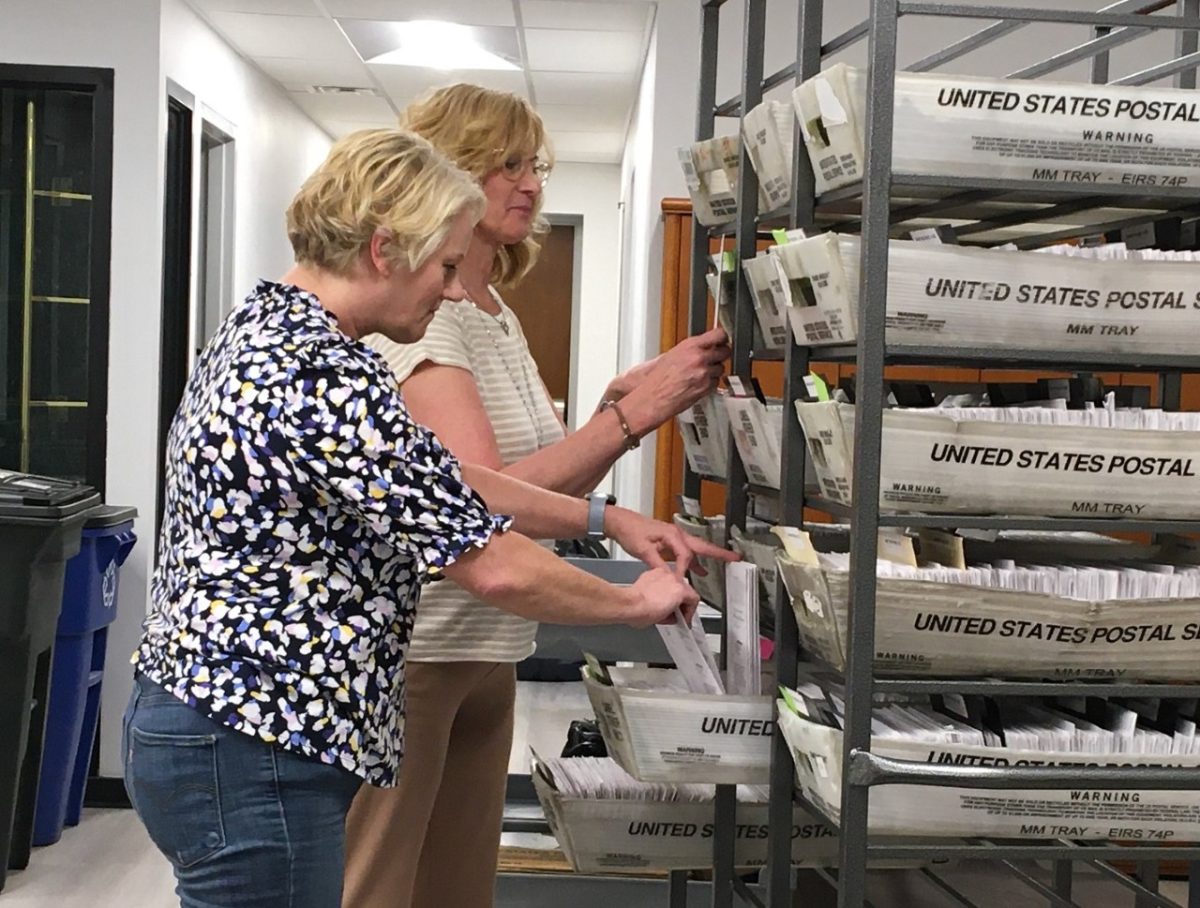
In this May photo, two Fayette County Election Bureau employees go through stacks of mail-in ballots prior to the primary. Fayette was one of three counties sued by the state Department of State for refusing to include mail-in ballots that did not have a date written on the exterior of the envelope in its certified results for the May election.
Last week’s ruling by the U.S. Supreme Court over undated mail-in ballots from a Lehigh County judge’s race last year is throwing a curveball to county elections officials who are unsure whether such ballots that arrive ahead of next month’s midterm election should be counted.
County elections directors across Pennsylvania thought the question had been resolved over the summer when a state appellate judge ruled that mail-in ballots should be recorded even if the voter did not write the date on the outside envelope.
But the U.S. Supreme Court declared Tuesday that a 3rd Circuit Court of Appeals’ ruling in last year’s Lehigh County judicial race “moot,” although the outcome of that election was not changed. Acting Secretary of the Commonwealth Leigh Chapman issued a statement afterward that her department’s guidance is for counties to still count undated ballots. In her statement, she cited an August ruling by Commonwealth Court Judge Renee Cohn Jubelirer that requires undated ballots to be counted after Fayette, Berks and Lancaster counties refused to do so following the May primary.
“It provides no justification for counties to exclude ballots based on a minor omission, and we expect that counties will continue to comply with their obligation to count all legal votes,” Chapman said of the U.S. Supreme Court ruling.
The judicial whiplash has been confusing, to the say the least, with more litigation expected to follow, meaning the issue doesn’t appear to be settled.
“The bottom line is we’re following this back and forth … but on the eighth of November we will conform to the latest Department of State guidance,” said Greene County Commission Chairman Mike Belding, who also is a member of the county’s elections board.
But county elections officials are also being cautious with how they approach the issue and are planning to “segregate” undated mail-in and absentee ballots from the rest of the allotment in the event there is a court challenge before or after the Nov. 8 election.
Washington County Elections Director Melanie Ostrander said the county’s solicitor is reviewing the court rulings to understand what to do with the undated ballots.
“We’re segregating everything. We’re segregating the ones without dates so that when we make our determination we can put them back in the population,” Ostrander said.
“Bins with no signatures, bins for no dates, we’re just keeping everything separate,” Ostrander added, while noting that they have not received any undated ballots as of Thursday. “No matter what counties decide what to do, I just feel like there will litigation, because that’s what happens now.”
While Act 77 of 2019, which expanded the use of mail-in and absentee ballots, expressly states that voters “shall” sign and date the envelopes, there are numerous quirks in the state’s Election Code with similar mandatory requirements that would be shocking if strictly enforced today. For example, elections directors are required to send lanterns to each precinct, according to portions of the code written in 1937, while voters must close a curtain behind them when casting a ballot. No electronic voting machines used in today’s elections have curtains to offer privacy, and it would be preposterous to invalidate every in-person vote on Election Day.
However, there are some requirements that state courts have ruled must be followed. All ballots must be sealed in a “secrecy envelope” before being placed in an outer envelope, which must be signed by the voter to count. If a ballot is “naked” and not in the secrecy envelope, the vote will automatically be discarded. Mail-in ballots must also either be delivered through mail or turned in personally by the voter at their county’s elections office no later than 8 p.m. Nov. 8.
Fayette County Commission Chairman Dave Lohr, who also leads the county’s elections board, said they plan to segregate undated ballots, but they’re unsure whether they’ll decide to count them. Fayette County was one of three counties in Pennsylvania that withheld counting its undated ballots – there were only 52 of them – following the May primary until Cohn Jubelirer’s ruling forced them to do so in order for state officials to certify the election.
“We haven’t made any formal decision yet. That will go before the election board when we see what’s going on with the ballots themselves,” Lohr said. “It’s one of those things, it’s sitting in limbo at this point. And then we’ll make the decision when we make it.”
He said the elections board may have to convene a special meeting before the election, although he’s hopeful they will get a concrete answer, which could come in the form of new court rulings. But he added that he thinks the state legislature needs to re-examine Act 77 and fix problems with the original legislation that raised so many legal questions over the past three years.
“We’re definitely on top of this and going to make sure we do it the right way, the legal way,” Lohr said.
Belding said Greene County won’t segregate undated mail-in ballots before the election because they’re filed alphabetically by precinct. By then, he’s hopeful a final decision will be made on how the county should proceed in canvassing the votes.
“Right now there is a huge back and forth in court cases,” Belding said. “I just want a final decision. Just tell me what to do.”
The last day to request a mail-in ballot is Nov. 1, while the final day to register for the midterm election is Oct. 24.