

Battle to keep contraband out of jails intensifies with prevalence of deadly drugs
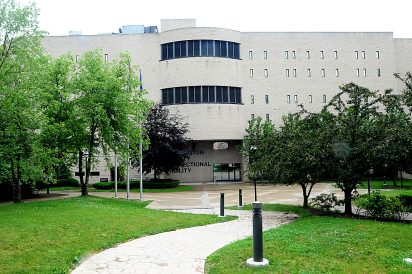
The prevalence of more lethal drugs like fentanyl circulating in the community is making it harder for jails to keep them out of their facilities.
While Fayette County Prison Warden John Lenkey said that in the past they might see marijuana smuggled in, they’re now discovering harder drugs that can kill.
“It’s trickling right down to prisons,” Lenkey said. “It’s scary because we don’t have the medical people there like at a hospital or like we will in our new prison. That’ll be a totally different story. It’s scary.”
An inmate at the Fayette County Prison overdosed on fentanyl last Saturday night, Lenkey said, although he was immediately revived by the facility’s medical team and taken to Uniontown Hospital for further treatment. He recovered and was returned to the jail in about two hours, Lenkey said. Jail officials are now investigating how the drugs got into the facility.
He said there have been several overdoses at the jail this year and that they typically come into spurts. While stopping contraband coming into jails is an age-old problem, the lethality is what is especially concerning to Lenkey, who has served as warden there for more than two years.
“It feels like we made progress compared to where we were,” he said. “A lot of progress doesn’t show as much because before the drugs getting in were just marijuana. Now with the rise of fentanyl, one touch of that …and (the inmate is) ODing. The drugs coming in have become more lethal, during my tenure.”
One problem in Fayette County is the antiquated jail that was built in 1892 and underwent an expansion nearly 25 years ago. The facility is outdated and lends itself to strange attempts by inmates trying to get drugs inside, including one who attempted to cast a fishing line out a window to snag a bag of drugs from an accomplice on the street, according to a March 2021 grand jury indictment.
That’ll hopefully change soon with construction of a modern 114,500-squre-foot jail that county officials expect will open next year. Until then, the jail is getting help from its neighbors to the west in Washington County, which has a high-tech body-scanning machine that can detect packages being smuggled in by inmates during processing. Any person self-reporting to the Fayette County jail is automatically taken to Washington County for the scan before being permitted to go into the Uniontown facility.
“They know they’re going to jail, so they might have something on them,” Lenkey said.
That’s usually a deterrent for anyone coming into the Washington County jail, Warden Jeffrey Fewell said.
“When they know they’re going to go through the body scanner, they usually take (the drugs) out,” Fewell said. “They cough it up.”
But just last week, a woman who was scheduled to be incarcerated in Fayette County refused to remove an item seen in the body scan. Fewell said they were required to get a search warrant and take her to Washington Hospital, where medical staff physically removed it.
The scanner cost nearly $100,000 and has been in use in Washington County since 2018. Fewell said the jail has numerous other tools at its disposal, but stopping drugs from entering the facility is an ongoing battle as inmates become more and more creative.
“You have to be on your A-game every single minute,” he said. “There’s no silver bullet, even with the body scanner.”
The jail also performs regular sweeps with drug-sniffing dogs, cell searches and random urine tests.
“As soon as the K-9s come in, the toilets start flushing,” Fewell said. “They know the dogs are very, very good deterrents.”
More concerning for Fewell is how half of the people who enter the jail are usually in for problems associated with addiction, whether it be from drugs or alcohol. That makes the staff’s jobs more difficult by entering inmates into detox programs or taking them to the hospital for further treatment, if necessary.
While the jail has not had an overdose in the two years since Fewell’s been supervising it, that doesn’t mean the staff doesn’t deal with ramifications from drug abuse. Most addicts who come in are suffering from various health problems or mental health issues, which can complicate an already volatile situation. He praised the county’s contracted medical provider PrimeCare, which began services at the beginning of 2021 and added more specialized positions for treatment this April.
“It’s poor health. The drug use is so bad that they’re in poor health when they get here. We’re in the hospital all the time. All the time,” Fewell said. “This jail is an addiction clinic and a mental health clinic.”
As for keeping drugs out of a jail, it’s nothing new to Fewell and something he’s keenly aware of monitoring at all times.
“I don’t think it’s gotten worse. It’s just been so bad this whole time,” Fewell said. “It’s been nonstop for the past five or six years. It’s just constant and something we’re very aware of.”