

Substitute teachers in short supply in region
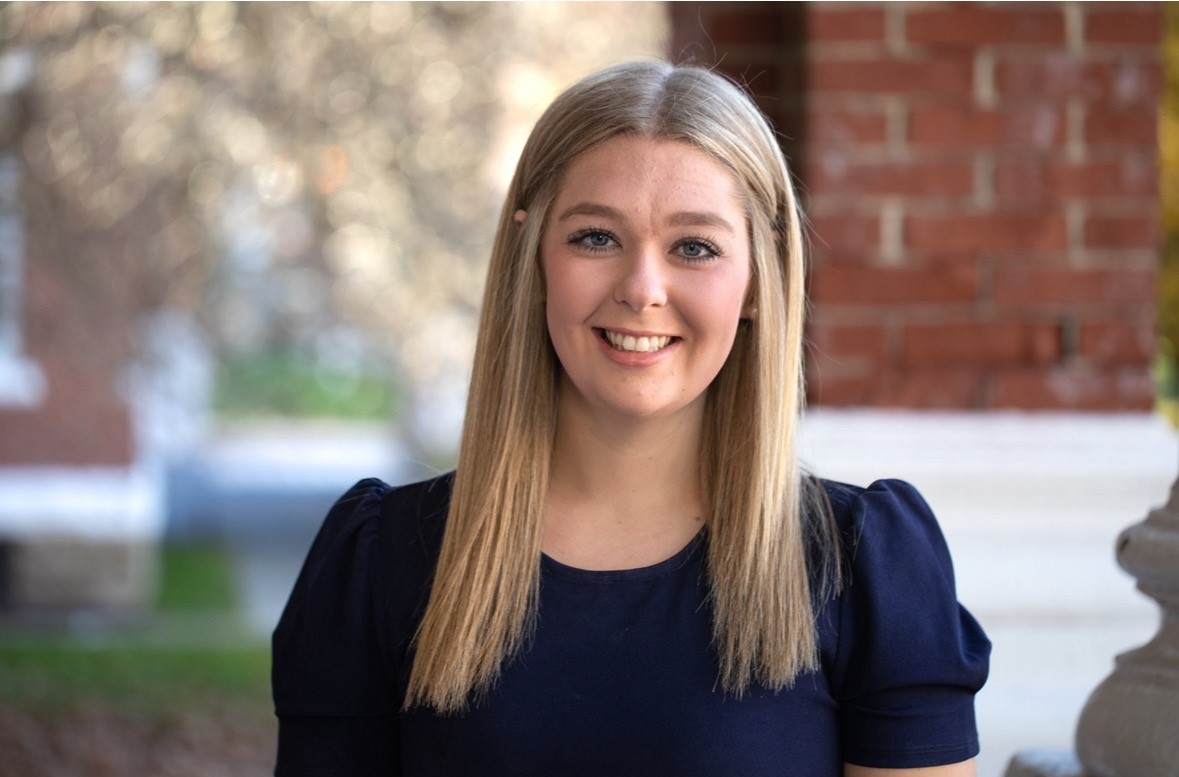
Mikayla Golden is a substitute teacher in the Laurel Highlands School District.

Finding qualified candidates to fill the role of substitute teachers is becoming increasingly challenging for area school districts.
Substitute teachers are an important part of every school district, essential to maintaining the smooth operation of the school day.
If a full-time teacher needs a day off, districts have a pool of teachers from which to draw to step in and cover a variety of subjects.
“Substitute teachers play a crucial role in our school district,” said Brandon Robinson, Jefferson-Morgan superintendent. “When we have enough substitutes, we don’t have to pull our teachers from other obligations or combine classrooms with larger class sizes for the day.”
However, finding qualified people to fill the role is becoming more and more challenging.
“Substitutes are hard to come by,” said George Lammay, Washington superintendent. “Young people want benefits that usually day-to-day subs don’t receive.”
Dr. Jesse Wallace, Laurel Highlands superintendent, agreed.
“It is much more difficult than in past years and seems to get increasingly more difficult as the years go on,” he said.
Ultimately, interest in the teaching profession in general has declined.
During the 2012-13 school year, Pennsylvania certified 18,957 teachers, a total that dipped during seven of the subsequent nine school years.
State data for the 2021-22 school year shows that just 5,101 new teachers were certified in the commonwealth.
“Some blame the pandemic for the change in mentality,” Lammay said. “I am not sure if that is true, but something is clearly different these days.”
Many districts have been recruiting candidates for emergency substitutes. Washington has five regular emergency substitutes.
“Anyone with a bachelor’s degree can go through a brief training and then sub,” Lammay said. “Often, these are younger folks looking for work while thinking about their career. We have a coach doing this currently.”
According to the state Department of Education, a candidate who lacks the required teacher certification but who has a bachelor’s degree can be hired if the district acquires an emergency permit. In the 2021-22 school year, 6,366 classroom teachers were working under those permits.
“If you have a bachelor’s degree, you can be certified to teach for one school year for any particular school that submits the request for that,” explained Matthew Mols, principal of Washington High School. “That certificate is good just for that one school year, but there’s nothing impeding the school from requesting it each year.”
The emergency certificate can be renewed each year for a small fee.
Charleroi Area School District recently hosted an emergency substitute training session.
Dr. Kevin Monahan, Central Greene Superintendent, said the district has had many substitutes go through the emergency substitute program through Intermediate Unit 1.
“In theory, it should provide us with a greater pool of possible substitute teachers, but many substitute teachers have commented that the daily pay is a motivator for substitute teaching in various districts,” he said.
For many districts, $120 a day is the going rate for a substitute while retired teachers may earn up to $150 a day.
The district addressed the lack of substitutes by petitioning the Public School Employees Retirement System (PSERS) to allow retired teachers to serve as substitutes without penalty regarding their pensions.
“On paper we have approximately 32 individuals on our substitute teacher list, but we only have approximately 10 who consistently substitute in our schools,” said Monahan. “Out of those 10 substitute teachers, about half are retired teachers.”
Washington has four retired teachers serving as substitutes.
Robinson said Jefferson-Morgan has a fluctuating number of substitutes available, six to eight on standby at the middle and high school levels and two or three at the elementary level.
“Although we have more substitutes on our approved list, the numbers mentioned represent those who reliably respond and fill open positions,” he said. “In recent times, it has become somewhat easier to find substitute teachers due to the relaxation of substitute teacher guidelines. However, our district faces challenges in recruiting certified teachers, resulting in a higher proportion of emergency certified substitute teachers.”
Mikayla Golden, 22, graduated in May from PennWest California and is looking to become a full-time teacher. She is currently a long-term substitute at R.W. Clark Elementary School in the Laurel Highlands School District.
“I’m in the same classroom for the entire year,” said Golden, who interviewed for a full-time job, but the district had just one opening. “Somebody took off the whole year for a sabbatical and I got pushed into that position.”
Golden was a day-to-day substitute while in college and at times was notified the night before or even the morning of being needed due to an illness.
“I really liked that because it gave me the experience in multiple grade levels,” she said. “I learned through the process that there are some grades that just aren’t the right fit for me. Any day that I was available I was called because there is such a need for substitutes.”
She plans to interview with the district again next year, bringing with her the experience of a full year of teaching.
House Bill 27 is viewed as a way addressing the shortage of substitute teachers. A vote of concurrence on the bill was approved in the state House Oct. 4.
The bill would permanently allow schools to hire retirees, teachers with inactive certifications, recent graduates with education degrees and certain student teachers to work as substitute teachers.
The bill would maintain the removal of limits on the number of days worked under a day-to-day substitute permit, typically from 10 to 20 days through the 2025-26 school year.
“House Bill 27 has the potential to significantly impact our substitute teacher process,” J-M’s Robinson said. “It would offer us a better opportunity to fill teacher vacancies, not only for short-term needs but also for longer absences that may require retired teachers with appropriate certification to step in.”
However, Golden is optimistic that there will be an increase in those interested in teaching.
“I think COVID kind of burned out a lot of people,” Golden said. “But I think it’s building back up. I have a lot of friends who are still substituting and working their way up the system. I think it will build back up.”