

After surgeon general’s call for warning labels, local counselors say social media vigilance is needed
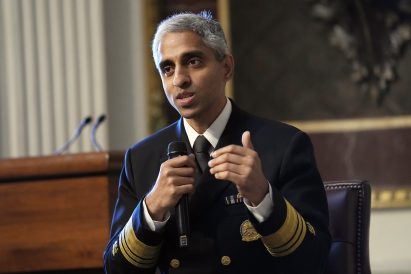 Associated Press
Notice: Undefined variable: article_ad_placement3 in /usr/web/cs-washington.ogdennews.com/wp-content/themes/News_Core_2023_WashCluster/single.php on line 128
Is TikTok as dangerous as a pack of Camels?
It might not corrode your lungs the way tobacco does, but on Monday U.S. Surgeon General Vivek Murthy recommended that warning labels be placed on social media sites like TikTok as well as Snapchat, YouTube, Facebook and many others for what Murthy said were the dangers those platforms posed to the mental health and well-being of young people.
The labels would not be unlike those on cigarettes and alcohol.
In an essay published by The New York Times, Murthy wrote, “It’s time to require a surgeon general’s label on social media platforms, stating that social media is associated with significant mental health harms for adolescents.”
Murthy noted that putting warnings on social media sites would require congressional action, and they would “regularly remind parents and adolescents that social media has not been proved safe.”
Murthy and others have contended that social media and its widespread use among young people has been a key contributor to a mental health crisis that has manifested itself in anxiety, depression and suicidal thoughts. It can also be an arena for adult predators to prey on children.
However, other experts counter that the rise of social media corresponds with other events that could be factors in the mental health crisis, such as the social isolation caused by the COVID-19 pandemic, polarization along political or cultural lines or social inequities.
Social media use is ubiquitous among young people – a Pew Research Center survey this year found that 93% of U.S. teens use social media, translating to about 37 million adolescents. Braelyn Tracy, a psychologist with Tracy Counseling Center in Lemont Furnace, agreed that warning labels are needed.
“The lack of monitoring makes it toxic,” Tracy said, pointing out that bullying is a frequent problem among teens and preteens who are on social media. She also said that social media can lead anyone, regardless of their age, to believe that everyone else’s life is idyllic compared to their own.
Tracy, who specializes in child and adolescent psychology, also explained that social media use can gobble up time that children who are in junior high or high school could be using to study or engage in activities like sports. Some young people “are just so fixated and obsessed with technology,” Tracy said, adding, “It’s an easy thing to get distracted.”
Mary Jo Podgurski, a counselor and founder of Teen Outreach, affiliated with UPMC Washington, likened social media to coffee – it can have benefits, but you don’t want to overdo it, and its consumption can be unhealthy for some people.
“I think it’s complicated,” she said. On the one hand, she noted, social media can spawn harassment and bullying and, as Tracy noted, consume too much time, but it can also help adolescents discover friends who share their interests or affinities.
“I don’t think a warning label will make much of a difference,” Podgurski said. “I don’t think we can put the genie back in the bottle.”
Podgurski said she has recently been reading the recently published book, “The Anxious Generation,” by Jonathan Haidt, which argues that children should be kept away from social media until they are in high school and not be given smartphones until they are 16. Haidt has also called for phone-free schools, and “most teachers tell you that would be wonderful,” Podgurski pointed out.
“We have to try to bring out what is best for our kids and set boundaries,” she said. “I don’t think social media is bad. … Education is the thing.”
Before social media use became so widespread, Fridays used to be the days when there would be the most student conflict, according to Mike Perrott, the lead school counselor with the South Fayette School District. Now, it’s Mondays, because some students end up locking horns on social media over the weekend and confrontations happen when they come face-to-face.
“Things fester over the weekend,” Perrott explained. He also believes placing warning labels on social media sites is “a warranted action.”
Just as adults do, students can become obsessed with how many likes or dislikes their posts receive on social media, and can be hurt by casual remarks about their weight or looks.
“It’s kind of a litmus test for your social standing,” Perrott said. “Kids haven’t had the life experience to understand that experience.”
What advice does Perrott and his fellow counselors give to parents?
“You need to keep a watchful eye,” he said.