

Editorial voices from elsewhere

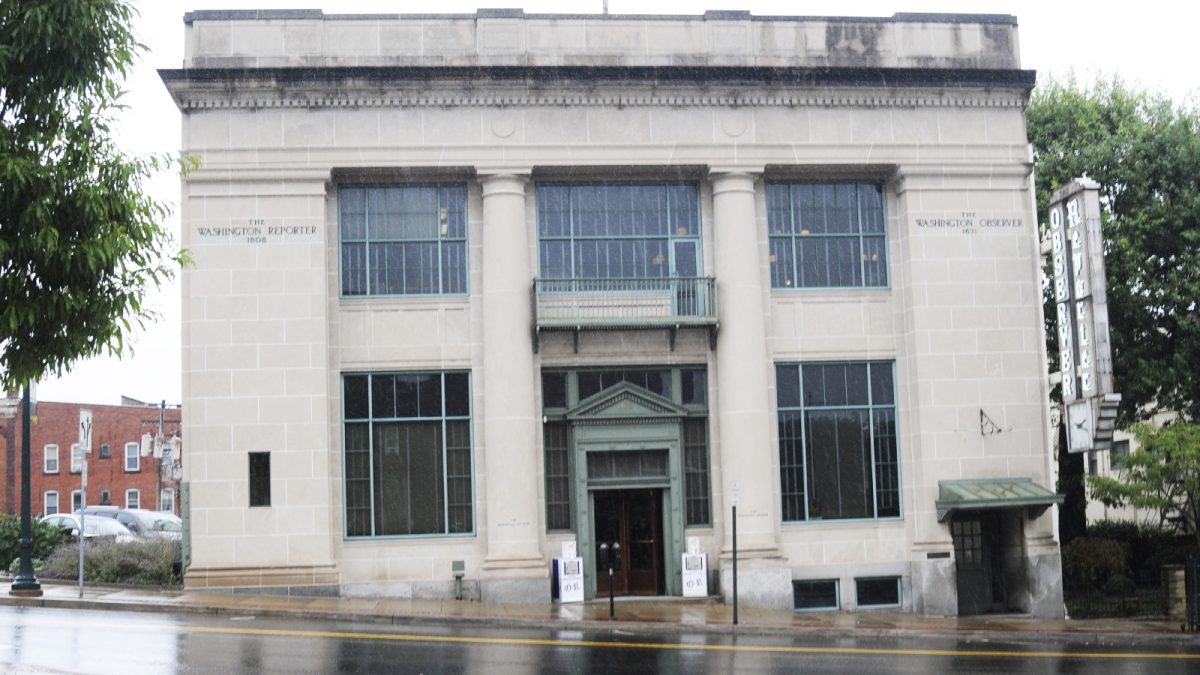
Jim McNutt/Observer-Reporter Exterior of the Observer-Reporter building in Washington.
Editorial voices from newspapers around the United States as compiled by the Associated Press:
Imagine the national outrage if 47,055 Americans died from terrorist attacks in one year. That’s how many Americans died from drug overdoses in 2014. More than half of those deaths involved opioids, a class of drugs including legal pain killers and heroin.
President Barack Obama rejoined the debate recently, announcing a wide range of efforts focusing on far more than just the criminal aspects of substance abuse, including expanded treatment efforts and ensuring health coverage for substance abuse and mental health are sufficient.
While we welcome the president’s renewed efforts and focus on the role mental health plays in addiction, we fear the new plan is insufficient given the explosive growth of heroin addiction alone. One place the president would be smart to look at for ideas is Ohio, which has made measurable progress in controlling legal drugs in recent years despite the state’s death count rising.
Prescriptions for painkillers dropped 12 percent last year, while doctor shopping fell 71 percent thanks to a computerized reporting system designed to stop people from getting multiple painkiller prescriptions.
Imagine how many more would have died or progressed to illegal drugs without these steps and aggressive use of drugs that can reverse overdoses.
The rise in terrorist threats including bombings and other mayhem in the United States and across the world has understandably caused a rise in fear. Fear, unfortunately, can lead to irrational – even stupid – responses.
That has been the case at a number of fast-food restaurants across the country that have recently been pranked by callers posing as fire officials who have called the restaurants warning them they have dangerous levels of gas building up inside their establishments.
The solution, the pranksters advise, is to smash out the restaurant windows to let the gas escape and prevent an explosion.
These were not terrorist acts judging by the news reports; they were simple, vicious and expensive pranks. But we would venture to say that the irrational response by restaurant workers to the fake warnings may well have been rooted in the fears that terrorist acts have caused.
The solution for fast food restaurants and other business establishments is better communication and better protocols for handling threats and potential emergencies – and the first step should be calling fire departments and police, not breaking out windows based on an anonymous call. Take fear off the menu and replace it with a serving of common sense.
School quality is such an important factor in home values that real estate agents are sometimes counseled not to mention it to prospective buyers. The concern, agents are warned, is that too much enthusiasm for attractive, well-performing schools may harm sales in other areas.
Real estate firms aren’t the only ones who believe that good schools are good for property values. Surveys of buyers frequently find the same things, and that applies not only to families with school-aged children but also to older buyers.
At least one respected group of economists says the schools are the driving force in the equation. Generous buyers don’t cause healthy schools. Instead, successful schools raise property values and sales prices. Those economists don’t work for a school board trying to get a bond request passed. They work for the Federal Reserve.
Good schools, they’ve found – most recently in a 2010 study of thousands of homes in the St. Louis area – protect property values. They found that having effective, attractive schools made homes and other properties in neighborhoods and communities more valuable. Good schools protect the equity you have in your home.
Good schools – the ones with ‘B’ averages – add about 10 percent to the value of the same home. And the best, grade ‘A’ schools add as much as 20 percent to local property values.
The bankers at the Federal Reserve would say that spending a couple of hundred dollars a year for better-equipped, more-capable schools for a $10,000 to $20,000 return is a smart financial decision.