

More Sunshine needed in Charleroi, elsewhere
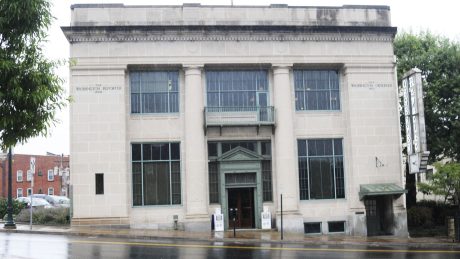
Before a regular Charleroi Borough Council meeting last week, five council members attempted to hold a closed-door meeting with representatives of the Middle Monongahela Industrial Development Association, which plans to purchase and develop the historic Coyle Theater property. A reporter from this newspaper challenged the legality of the executive session, and so the meeting room door was left open.
Susan Morgan of the Washington County Redevelopment Authority also attended the would-be private meeting with MIDA, which was not advertised. The borough’s solicitor, Alan Benyak, said he was unaware of the meeting.
The circumstances for which executive sessions are permitted under Pennsylvania’s Sunshine Law are specific and limited, and a meeting of a quorum of council members with MIDA clearly fell outside those limits.
We are weary of local government officials and school directors doing their business out of earshot of the pesky public, using such vague excuses as “personnel” and “litigation” to discuss everything under the sun in secret.
Certainly, there are legitimate reasons for boards and councils to meet privately, and the law is clear about what they are.
Those reasons, as related by the Pennsylvania Media Association, are: to discuss personnel matters, including the hiring, promotion, disciplining or dismissing of “any specific prospective public officer or employee or current public officer or employee employed or appointed by the agency,” but not including filling vacancies in any elective office; to hold information, strategy and negotiation sessions related to collective bargaining agreements or arbitration; to consider the purchase or lease of real estate up to the time an option or agreement is obtained; to consult with its attorney or other professional adviser about litigation or issues as to which identifiable complaints are expected to be filed; and to review and discuss agency business which, if reviewed or discussed in public, would lead to the disclosure of information recognized as confidential or privileged under law.
Although just about everyone agrees that the people we elect to office ought to perform their jobs in public view, the elected seem to forget this as soon as a touchy subject comes up for review. They prefer to huddle in private and come to decisions there, then cast their votes in public sessions without explanation.
Should their solicitor object to these shenanigans, he’s likely to be fired and replaced by an attorney whose opinions are more flexible.
In order to drive a car, you have to learn the rules of the road and take a number of tests and obtain a license. But you don’t have to know anything to be elected to or hold almost any office, to be entrusted with the education of children and perhaps millions of dollars of taxpayers’ money.
Anyone who wants to serve as a magisterial district judge, except for lawyers who are members of the Pennsylvania Bar, must take a training course and pass an examination in order to take office. There is no such requirement for council members, supervisors or school directors.
Training courses for newly elected officials are offered by organizations like the Local Government Academy, the Pennsylvania Association of Boroughs and the Pennsylvania Municipal League, but training is not required by law.
It ought to be.