

County land bank an amazeballs plan
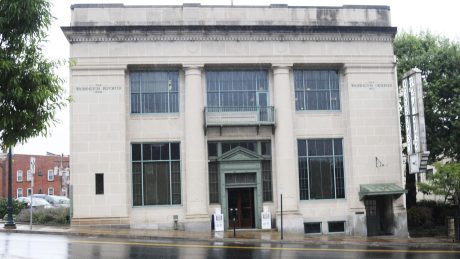
Washington County commissioners are expected to approve formally the formation of a land bank at its meeting Thursday. And this is a positive step along the way toward eliminating blighted properties.
The land bank will be able to negotiate a sales price for a property before it goes on the block for a judicial sale conducted every June. At the sale, properties on which the owner owes back taxes are sold without local liens, which are erased by court order; but unpaid state and federal obligations remain.
Here’s what happened to this point: A property owner neglects his building and does not pay real estate taxes; the accumulated tax debt makes sale of the property unlikely; the building continues to deteriorate to the point at which it is condemned; the court orders the property to be auctioned without the burden of local tax debt; the property owner never pays the taxes due, and the school district and municipality never receive that revenue; the buyer at auction finds the burden of restoration too great, the building further deteriorates and the taxes go unpaid. The procedure is then repeated until the building must be demolished at taxpayer expense, leaving another gaping hole in the jaw of a community.
Members of the land bank’s board of directors are also directors of the county’s Redevelopment Authority, so, essentially, the Redevelopment Authority has been granted the authority to purchase property with three options: repurposing or rehabilitating a blighted structure; demolishing a building to provide space for a park or public use; or a side-yard program, whereby an abandoned property would be split between two neighbors who would buy and pay taxes on adjacent halves.
The property would not be purchased by the land bank until a plan for its use was in place.
Money doesn’t simply appear out of nowhere in bank vaults, and neither do the funds in the new land bank. Joining the bank will cost a school district or municipality $3,000 the first year and $1,000 each year after. So, taxpayers will still be on the hook for clearing the blight. But the advantage here is the blight can be ended, not perpetuated.
City, borough and township officials have been continually frustrated in their efforts to clean up dilapidated properties when titles change from one absentee owner to the next. They and their constituents are willing to spend the money to address the problem but so seldom have that opportunity.
The land bank will give them that opportunity.