

EDITORIAL: Historic preservation an important facet of community life
Does this region have a problem with blight?
You bet it does, a fact readily confirmed by a glance at recent headlines, or a simple drive around communities that were thriving when manufacturing was preeminent, but are now struggling to find their footing in an economy driven more by semiconductors than smokestacks.
While the need to tear down buildings that have outlived their usefulness or pose a hazard is clear, what is less apparent is the need to preserve structures and business districts that have historic or aesthetic importance. It’s important to not wallow in nostalgia, but it’s also important to not let our history be consigned to a scrap heap.
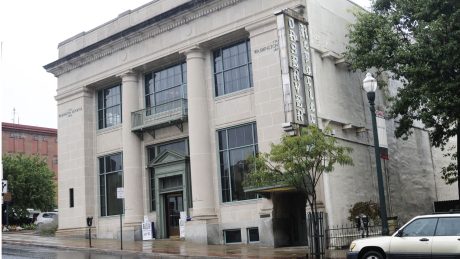
For that reason, the work that the Young Preservationists of Pittsburgh is carrying out should be applauded. Every year, the organization releases a list that highlights 10 preservation opportunities in the region, and the 2018 register includes Washington’s Main Street and Landmark Place in Monessen, which was used as a steelworkers hall and a dance emporium during its life, and has been sitting empty for about a decade, its roof now leaking.
The Young Preservationists of Pittsburgh has previously put a spotlight on other buildings in Monessen, including the Victorian-era abode that has more recently hosted the Castle Blood haunted attraction and the three-story edifice that once housed the Monessen Savings & Trust bank. Outside of the Mon Valley and Washington, such sites as the Regent Square Theater, the Lohr Building in Wilkinsburg and the Alcoa Research Laboratory in Westmoreland County have been recognized by the Young Preservationists as being worth saving.
“How many can be saved?” asked Matthew Craig, the group’s executive director. “I don’t know.”
Quite a few of them, we hope.
It should be noted there are reasons beyond history and aesthetics that make some buildings worth preserving. Julia Rocchi of the National Trust for Historic Preservation pointed out in an essay, “Six Reasons to Save Old Buildings,” that some older buildings – particularly those constructed before World War II – could well be built with material that is more durable than what is available today.
Older buildings can also be good homes for specialty, mom-and-pop businesses like ethnic restaurants or bookstores, and are tangible reminders of an area’s history. Rocchi also reminds us that once a building is torn down, there’s no rebuilding it.
“Maybe older buildings are just more interesting,” Rocchi explained. “The different levels, the vestiges of other uses, the awkward corners, the mixtures of styles, they’re at least something to talk about. America’s downtown revivals suggest that people like old buildings. Whether the feeling is patriotic, homey, warm, or reassuring, older architecture tends to fill the bill. … Regardless of how they actually spend their lives, Americans prefer to picture themselves living around old buildings.”
Southwestern Pennsylvania has long used its storied and distinctive heritage as a selling point for tourists and talented people looking to relocate. That selling point is eroded just a little bit for every one-of-a-kind structure that is allowed to tumble into disrepair and ultimately fall to the wrecking ball.