

Building a Frontier Legaue roster takes time, patience, contacts, help and a lot of luck
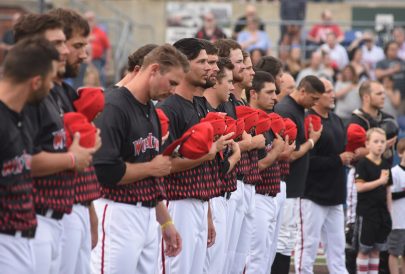
When Major League Baseball’s first-year player draft concluded last month, it meant all 30 teams could finish stocking the rosters of their short-season and low-Class A affiliates. Nine of the Pittsburgh Pirates’ draftees, including third-rounder Dylan Busby, an infielder out of Florida State, have been assigned to Morgantown, W.Va., and are playing for the West Virginia Black Bears of the New York-Penn League.
The draft caps a lengthy process of scouting players. Some have been scouted for more than a half-dozen years. Multiple scouts have seen the player several times, evaluated him, talked to him and written reports about him before he is drafted.
In independent baseball, which includes the Frontier League, the process of player acquisition is much different. There are no scouting departments and no farm systems. So where and how do teams like the Washington Wild Things find their players? How do they evaluate those players? Do they do background checks? Who is responsible for finding and signing players? How long does it take to put a team together?
“Putting together a Frontier League team is a constant challenge,” said Wild Things director of baseball operations Tony Buccilli, whose duties include putting together the roster for manager Gregg Langbehn.
“It’s a crapshoot system. There is no offseason when putting together a roster.”
Buccilli and the Wild Things are an exception to the norm in independent baseball, where the task of finding, evaluating, recruiting and signing players typically is the sole responsibility of the manager.
Jeff Isom, manager of the Frontier League’s Joliet Slammers, has been a manager in both the affiliated and independent ranks. He was a manager in the Milwaukee Brewers’ system for six years and for another 11 years in independent leagues, including two seasons (2002-03) with the Wild Things. Isom likes independent baseball because it offers him the challenge of putting together his own roster.
“It was nice not having to worry about your roster,” Isom said of his days with the Brewers. “They tell you who the prospects are and they have to bat at the top of your lineup. You can focus on the developmental side. This league is more about what can you do for me right now. If the guy is not getting the job done, then we’re moving on. If a guy is in affiliated ball and he’s not getting the job done, then we’re going to work with him until the front office pulls the plug.
“I enjoy both sides of it but I enjoy having control of my roster. I like to have the ultimate say. At the end of the year, the only person I can blame if we don’t play well is me.”
During his years in independent baseball, Isom learned a few things about building a team and won-lost records.
“You can put in as much work as you want or you can put in as little as you want,” he said. “The end result is, the amount of time you put in will show in your record.”
In the affiliated minor leagues, especially at the lower levels, teams have rosters stockpiled with their own draft picks and Latin players who are not subject to baseball’s annual draft and are signed as free agents.
In independent baseball, players have various backgrounds and are acquired in a variety of ways. Many are former affiliated players who were drafted but either never panned out or were squeezed out of a team’s farm system because of a lack of opportunities. They are hoping for a second chance. Some are former college players who went undrafted and are attempting to start a professional career and prove the scouts wrong. Others are career independent players.
“There’s always guys out there looking to play,” Isom said.
However, finding players who can produce, contacting them, signing them and molding them into a winning team is the tricky part. In the Frontier League, it usually takes a network of contacts, a lot of phone calls or text messages and a good sales job.
“It’s like you’re a college recruiting coordinator,” said Evansville manager Andy McCauley, who guided the Otters to the Frontier League championship last year. “I have to sell the league, sell Evansville, sell myself. We do a good job in terms of the number of guys we’ve moved to affiliated ball, so I sell that, too.”
Before the sales job, the independent team has to find players who can perform at a specific level and are willing to give indy ball a try. That takes a network of help. Independent teams are usually flooded daily with phone calls and emails from a variety of sources who are trying to land a job for a player. Mike Pinto, who is in his 11th season as manager of the Southern Illinois Miners and has never had a losing season in Marion, says between emails, calls from scouts, agents, college coaches and players, he averages 10 contacts a day. River City manager Steve Brook, who guided the Rascals to the Frontier League championship in 2010, also said he averages about 10 contacts per day. Buccilli says he averages “three or four” contacts per day in the offseason and “10 to 20” per day after the major league draft.
“There are a lot of farm directors and scouts who contact me and give me a heads-up about a player who has been released or will be released, and they’ll give me all the information about the player,” Isom explained. “You still have to do your homework on these guys because those people don’t know what our league is all about. You get a lot of phone calls from agents. They’re helpful for me. They have a lot of guys who they want to get placed.”
Said, Pinto, “It’s all about developing a network of contacts.”
One way the Frontier League is different from many affiliated leagues is the way its houses its players. Most affiliated teams have players living together in apartments. The Frontier League uses host families for players, so it must be more concerned about a player’s character. That’s where word-of-mouth recommendations help. Some teams have gone as far as using social media to check a player’s background and character.
“That’s a big thing with me,” Isom said. “You’re trying to paint a picture of who these guys are. You can look at statistics. Those are easy to find. The next thing I’ll do is look on social media to see what he is all about. Is he a guy who is mad at the world or is he a guy who will be grateful for the opportunity? I might reach out to somebody who has been teammates with the guy, reach out to a college coach or reach out to somebody from an organization who I have an in with. Doing this for as long as I have, there are some organizations I can call and get background information on a player. The first thing I ask is, ‘Is this guy a good teammate?’ I ask that before I ask how he is as a player.”
Buccilli also said checking a player’s character is important. That’s why he tries to talk to each player and get a feel for the person before offering a contract.
“If I hear there is a problem, and it’s usually brought out to me that this is a guy you might not want to go after, that is something I take to heart,” Buccilli said. “They’re not going to say that just for something minor. Beyond that, you can have conversations. Something I’ve learned is, more important than talent is the character, the willingness, the understanding of the challenges before them. It’s not about going out every night and trying to have home run derby, it’s a grind.”
Every player drafted by a major league organization has been watched by a scout. In independent ball, teams often sign players sight unseen. Buccilli said the percent of former affiliated players he or a Wild Things coach has seen play before they sign with Washington is “10 to 20 percent. With the college guys, it’s higher, probably 80 to 90 percent. We try to get a look at them.
“Recommendations, to me, don’t go far anymore,” he continued. “I’ve seen Double-A all-stars, first-round picks, second-round picks come to this league and be awful. There’s no rhyme or reason to it.”
In independent baseball, where rosters often turn over as quickly as omelets, putting together a team is not as easy as signing every player a manager or personnel director likes. The Frontier League, for example, has an age limit, a salary cap and a restrictive and convoluted player classification system that is based on the player’s professional experience. There are roster limits for each classification, which makes teams selective about who they sign, even in the offseason.
“There are always guys who will fall through the cracks because of the restrictions,” Buccilli said. “For me, I enjoy it. It makes it more challenging. The salary cap is what it is. We’re all on the same playing field with the cap. But to look at this experienced player against this rookie, it’s comparing apples to oranges but that’s where the decision-making gets creative. That’s where your organization can make strides or take falls.”
The rules and restrictions make putting together a roster a year-round endeavor for most managers. It’s something they fret about, lose sleep over and think about even at unlikely moments. That’s something a manager in affiliated ball doesn’t experience.
“It’s a burden. It’s a constant burden,” Brook said. “It’s something I always feel an incredible amount of stress about, even on Christmas and Easter.”
“For me,” McCauley said, “the roster is starting to come together months before the season. In mid-October, the 6-year minor-league free-agent list comes out and that’s when it starts. Teams are releasing good players and nobody is really watching. You can get some good players if you’re paying attention.”
During the offseason, each Frontier League team is required to sign at least two players from the California Winter League that runs from mid-January to mid-February. There also is the annual Frontier League tryout and player draft in late April. Each team is required to draft at least two players after the tryout. Aaron Burns, a pitcher out of Texas-San Antonio who had no professional experience, was the Wild Things’ first-round pick at the league draft this year and he took a 2-0 record and 1.73 ERA into Saturday night’s game against the Gateway Grizzlies. None of the players from the California Winter League or Frontier League draft are guaranteed a roster spot on opening day.
A busy signing period for all independent teams is late-March and April, after major league teams release players from their minor-league camps. Multiple teams from multiple independent leagues are often bidding for the services of the same player.
When an independent team finalizes its roster for opening day, there’s no guarantee it will stay intact for any significant length of time. Players get signed by major league organizations, which is a good problem for indy teams, but others get hurt. Because there is no feeder system for independent teams, replacing players can be a problem. It’s helpful to have several players on speed dial.
“The system is completely different. So many things are out of my control,” Buccilli said. “If (center fielder) Rashad Brown gets hurt tonight, we lose our leadoff hitter and center fielder. There is no system to replenish that. I have to have a laundry list of guys on call. It puts you in a scramble drill. Kyle Pollock is an example of that. He was our starting catcher last year, and at the start of the season we were in great shape. Kyle gets hurt in batting practice the second day on the season-opening road trip. I’m at dinner at 6:30 at night and I get a call from (Langbehn). ‘We’re in bad shape. Pollock’s out,’ he said. So I’m trying to find a catcher immediately. I go right into full scramble drill for the next three hours.”
Pinto, who has guided the Miners to one Frontier League title, has been involved in independent baseball for 16 years and watched many players come and go. He has a theory on why players succeed or fail, and why some teams are successful or not. Pinto says there are five stages of players in the Frontier League, and the team that has the most Stage 5 players is likely to be the most successful.
According to Pinto, a Stage 1 player is a guy who thinks he’s too good to be in independent ball.
“He’s the guy who says, ‘I can’t believe I’m going to independent ball’ and feels sorry for himself,” Pinto said.
A stage 2 player, Pinto says, is the guy who looks at independent baseball as better than the alternative. “This is the guy who looks around and sees a $26 million ballpark and says this is not so bad.” That player usually is content to only do enough to keep a job in the league.
A Stage 3 guy can usually be chalked up as a bad signing, based on lack of talent or the player’s lack of understanding of independent baseball. “He’s the guy who says, “Wow! These guys are a lot better than I thought they would be,” Pinto said. “Sometimes these are guys who come from a Division I program in a power conference and think because of that they’re going to dominate in this league. They sometimes find out that it doesn’t always work that way.”
A Stage 4 player is somebody whose statistics or production suggests that he can play in affiliated ball. “He’s the guy who says, ‘I’m doing well, so how am I not getting picked up?’ and might worry more about his statistics or himself than about winning or might start feeling sorry for himself because he hasn’t been picked up,” Pinto explained.
A Stage 5 player, Pinto says, is the guy who every team needs.
“He’s the guy who says, ‘I’m not worrying about things I can’t control. I’m playing to win every day,'” Pinto said. “That’s the guy I want. He’s the guy who is going to play hard every day and not worry about his stats.”
Isom was the Wild Things’ original manager, back in 2002, when they advanced to the Frontier League championship series. The next season, he guided Washington back to the playoffs.
Much has changed in the Frontier League since 2002-03, especially in terms of rosters. As the league has gotten better, so has the experience level of its players. Isom’s Joliet team has relief pitcher Jose Ortiz, who spent the entire 2013 season in the major leagues with the Texas Rangers, pitching in 32 games.
“When I was with Washington, we were looking heavily for guys with affiliated experience,” Isom said. “Back then, if you could get guys with affiliated experience, they were going to have some success because so many of the rosters were filled with college guys. That has changed in recent years. This league has gotten better. I have a guy on my roster who played a full season in the major leagues and that would not have happened 10 years ago. He’s had arm injuries since and is recovering. I also have four guys with Triple-A experience. That wasn’t happening in 2002. This league has changed. It’s definitely a better league than it was back then. That’s why you have so many teams that are comparable. We’re all going after the same guys. Before, you took a lot of college guys and hoped for good results.”
Back in 2002 and ’03, just simply contacting players was difficult. The invention of the iPhone and social media has made it easier for managers.
“It was tough back in that day,” Isom said. “You would try to find a home phone number for a player. You would try to get the names of the player’s parents and then call directory assistance and get their phone number. Sometimes they had an answering machine with their home phone and sometimes they didn’t, so it was a different era. It’s hard to say that because it was only 15 years ago, but now you’re texting guys, calling guys on cell phones, reaching out to guys on Facebook and Twitter. Technology makes it different.”
Technology also makes it easier to evaluate potential players. Almost every player has a highlight video on YouTube and games at all levels are being streamed over the Internet.
Still, a team can have a good network of connections, take advantage of modern technology and work year-round at building a competitive roster, only to have one player’s unexpected decision quickly put a hole in the roster. Take, for example, the Wild Things. Only two weeks before the start of spring training, pitcher Matt Fraudin, an Upper St. Clair native, informed Buccilli that he was retiring. Fraudin was expected to be in Washington’s starting rotation for the third year.
“There is no offseason,” Bucilli said. “Look at Fraudin’s situation. He was one of the first guys to sign his contract for the new year, then his situation changed because of a job. I had to do a scramble drill on that one. I had all the pitching lined up and had big expectations for a local kid and then we lose a starting pitcher. We survived, but that’s why I say it never ends.”