

Waynesburg U. expects timely turf replacement
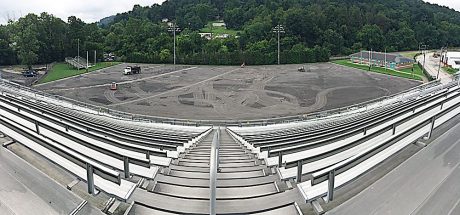
WAYNESBURG – With artificial turf fields becoming popular about a decade ago, local high schools and colleges have taken this summer to replace the old, worn-down turf.
Turf surfaces typically have a life expectancy of eight to 10 years, and replacing them is a necessity for the safety of the athletes who play on those fields.
California University of Pennsylvania replaced the turf at Adamson Stadium in early June, and Trinity High School installed a new surface at Hiller Field in early July.
Add Waynesburg University to the list, as it is currently in the process of installing a new turf surface at John F. Wiley Stadium. Similar to Cal U and Trinity, FieldTurf is the contractor, according to Stacey Brodak, vice president for Institutional Advancement and University Relations.
Brodak said the replacement process began in mid June and is expected to be completed in early August.
With about three weeks until Waynesburg’s preseason camp begins, the old turf has been removed but the new turf surface has yet to be installed.
Having the turf installment finished by the time the football team begins camp in mid August is a priority, said Brodak, who was hired by the university in early July.
“That’s critical to us,” Brodak said. “That’s been shared with FieldTurf, and I think they would understand our need to have that in place. We have no reason to believe we won’t make our deadline.”
In the other cases of turf replacement, the main reason was wear and tear of the surface. While the university was already in talks a year ago about potentially replacing the turf this summer, Brodak said, the need for new turf was expedited from damages from a flood last winter.
“We had a 10-year lifespan, (and) we actually were at the tail end of the lifespan on the old turf,” Brodak said. “That would have been on our radar to be looking at, and I think discussions had already begun about knowing that was going to be something that needed to be done.”
Due to the flood damages, John Olon, chief financial officer, said the university’s insurer, Travelers Insurance, has “indicated” it will cover “a majority of the cost.”
Since the project isn’t finished yet, a final cost has not been determined, Olon said.
The university originally estimated the damages were between $400,000 to $500,000, and Brodak said the turf replacement project will not cost more than the projected figure.
“We are fortunate that a portion of (the cost) likely will be covered under our insurance,” Brodak said.
While the university can’t control Mother Nature, Brodak said they are looking at any ways to improve the stadium’s drainage system, both inside the stadium and its perimeter area. She said university maintenance is currently looking into any ways to prevent future flooding at the stadium.
The selection committee that chose FieldTurf as the contractor also made the new design for the field. Olon said the design is very similar to the previous one. The main difference is the end zones will be black rather than green as it was with the old turf.
While the football team opens its home schedule Sept. 9 against Westminster College, the men’s soccer team will be first to compete on the new turf surface, as the Yellow Jackets scrimmage West Liberty Aug. 25.