

Best-pitched high school game? Start with this one
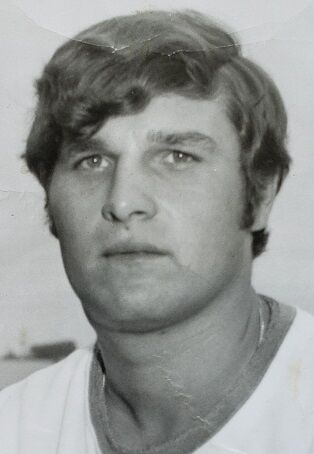
Richard Swinchock, a former Beth-Center standout, was drafted in the 19th round by the Pittsburgh Pirates in 1970 and pitched in 43 minor-league games over three seasons.
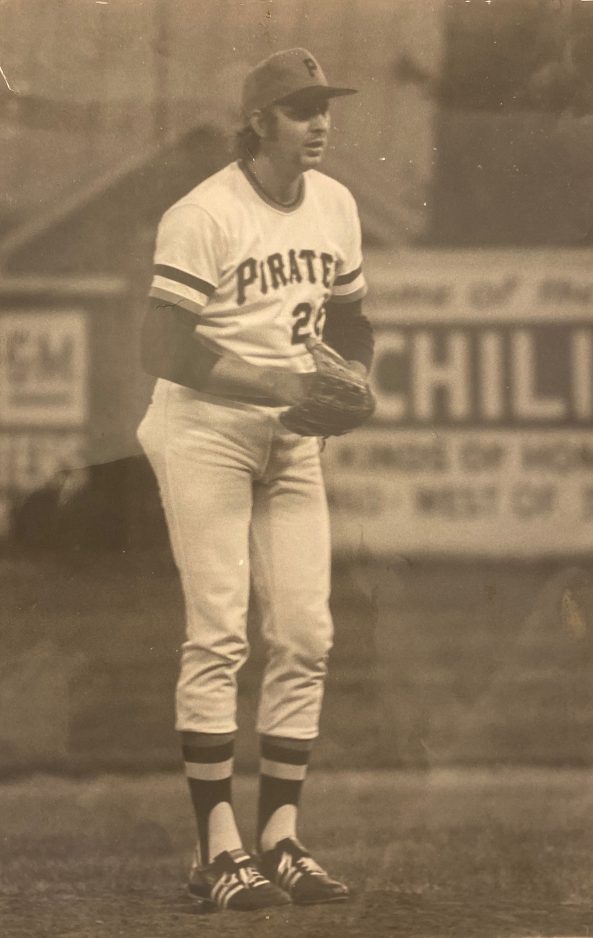
Bob Clites, a multiple-sport athlete at Mapletown High School, pitched parts of four seasons in the Pittsburgh Pirates farm system. In his final season, he was 2-0 with a 0.86 ERA in three starts, including two shutouts, for Class A Salem in 1976.
More than a half a century later, the legend of a pitching showdown between Richard Swinchock and Bob Clites still moves the emotions and stirs the memories of those who witnessed it.
Swinchock, a Beth-Center High School graduate, and Clites – one of Mapletown’s finest – faced off May 21, 1970 in a key section baseball game.
The end result was a 2-1 Bulldogs’ victory, which clinched a share of the section championship for them, and eliminated the Maples from postseason contention.
While the result was significant, the game itself, and specifically the pitching performances by Swinchock and Clites, were generational.
Swinchock, a lefty, struck out 25 batters in 11 innings, finishing with a two-hitter.
Clites, a right-hander, also pitched 11 innings and struck out 18. He had one of the two Maples hits, a double. Clites did surrender nine hits – two by Swinchock – to a potent Beth-Center lineup.
That’s a combined 22 innings pitched, 43 strikeouts, with only 11 hits and three runs allowed by the two pitchers.
“I remember sitting there in our wool uniforms and watching two guys, great athletes and pitchers, just teeing it up and setting them up,” said Frank Pryor, who was a sophomore for Beth-Center in 1970. “I was just blessed to make our team.
“Clites was tall and lanky. Dick was moving the ball around and jamming guys. They were both outstanding that day. It’s probably one of the best high school baseball games ever in our area. It was a phenomenal game.”
Swinchock and Clites competed against one another through youth sports. The stakes were never higher than the epic clash in their senior years.
Coincidentally, they were both drafted as pitchers by the Pittsburgh Pirates. Swinchock went in the 19th round while Clites was picked in the 39th round. It was a draft that produced two starters for the Pirates’ 1979 World Series championship team: Dave Parker and Ed Ott.
At the time they were drafted, both Swinchock and Clites planned to do something else. Swinchock was headed to California State College to play baseball. Clites was planning on playing collegiate basketball.
While their paths often crossed, they came together to pitch one of the best games in the history of Washington and Greene counties.
“We beat Beth-Center the first game we played that year,” Clites recalled. “Dickie didn’t pitch.
“The second game . . . he was throwing hard and faster as the game went along. Guys were coming back to the bench just shaking their heads and feeling frustrated. Dickie was clicking on all cylinders. I never faced a better high school pitcher than him.”
Swinchock said he wasn’t focused on the strikeouts or how he was doing it.
“You don’t think of that stuff in the middle of a game,” he said. “I was just worried about getting the win and getting out of there. They were a rival and it was a grudge game.”
Trailing 1-0 in the bottom of the sixth, the Bulldogs, who used the win as a springboard to winning a second straight Section 16 championship, struck back with a solo home run by Jerry Micsky.
The score stayed the same through the top of the 11th.
Micsky and Swinchock sealed the win. Micsky, who went on to play at Penn State, belted a triple and scored the winning run on Swinchock’s second hit of the game. Micsky had three hits and Fred Pagac, who went onto play football at Ohio State and in the NFL with Chicago and Tampa Bay, caught Swinchock and added two hits.
“There were scouts galore, stop watches and those big, old radar guns carried in big suitcases everywhere,” Pryor recalled. “I sat there and didn’t say a word. I was blessed to watch it happen.”
Clites makes points
Without a doubt, Clites made his mark as a baseball player, getting drafted and pitching in four minor-league seasons.
Injuries caught up with him as he attempted a comeback after pitching the 1970 and 1971 seasons and then being in the armed forces from 1972-1974. In 1975 and ’76, he worked almost exclusively as a starter, going a combined 5-5.
His final two games for Class A Salem were shutouts. An arm injury just became too much to overcome.
“I didn’t have anyone grooming me (for the draft or next level),” Clites said. “I didn’t really know what it meant to get drafted. Before you knew it, I was in Bradenton, Fla. It was kind of a shock to me. I planned on playing basketball. Nobody from the Pirates talked to me. I had a tryout with the Orioles. I had no indication. Who’d have thought a kid from Bobtown would be in Florida pitching for the Pirates?
“I did love baseball and while there was some doubt initially, you start to understand you’re just as good as the other guys.
“I felt strong at Salem and I had two good starts. I felt so good. On the trip back after the second shutout my elbow was swollen. I tried to rehab it but it just wasn’t coming around. I felt I had to get on with my life. It didn’t work out. I just prepared to live a normal life and get a lunch bucket out. I was glad for the opportunity.”
Clites was much more than a baseball player, though. He was a dominant basketball player and led Mapletown to consecutive 21-2 seasons in 1968-69 and 1969-70.
He was a scoring machine.
As a junior, Clites set a record in the Laurel Highland Basketball Boosters Tournament by making 21-of-21 free throws in a game.
Clites scored 292 points (14.4 points per game) as a sophomore. As a junior, he tallied 330 points, averaging 15 points a game, to lead the Maples to their first WPIAL playoff appearance in 34 years.
In his senior season, Clites scored 595 points, averaging 25.9 points per game. He scored 44 points against West Greene. Clites scored 30 or more points three times that season and 20 or more points 15 times, again leading Mapletown to the postseason.
“Bob was just a good athlete, very competitive,” said Chuck Gasti, a teammate. “As a pitcher, he had good speed. He threw fast and hard and had a good curveball.
“He was magical on the basketball floor. He made a lot of people look silly out there.”
“Some people really don’t understand how good Bob Clites was as an athlete,” said George Messich, one of Mapletown’s most heralded athletes, longtime football coach and a member of Pitt’s 1977 national championship football team.
“Back then, there was no three-point line. Bobby’s heels were often almost up against the out of bounds lines. (Shooting) came so natural to him. He’d make it look easy.
“He was there to win. That’s what made him such a great player. There is no doubt, Bobby Clites is the best basketball player out of Mapletown. He could have played Division I without a doubt. On top of that, you couldn’t find anyone who doesn’t like him.”
Clites resides in Greensboro with his wife, Renee. The couple have four children.
“I don’t regret anything,” Clites said. “You play the hand you re dealt.
“I am really proud and fortunate to have been able to do what I did. I played for my family and my teammates. I hope they know, how much I appreciated them. I always have been thankful for the opportunity I was given. I have been blessed with a tremendous wife and family.”
’Lefty’ was all right
It took Swinchock to the third grade to decide he “wanted to be a baseball player.”
His quest was confirmed the moment he was selected by the Pirates.
Ironically, the news didn’t inspire Swinchock to jump for joy. It did however, help him realize his dream. He was a professional baseball player.
“I was at Cal (California) signing up to play baseball,” Swinchock explained. “My mother was sitting on the porch when I got home and smiling. I said, ‘I got drafted? Not by Pittsburgh? Oh, no.’
“The (Baltimore) Orioles had a good team and I worked out for them. I really wanted to sign with them.”
The Orioles had birddogged Swinchock and the expansion Seattle Pilots also had shown interest.
Swinchock had played in the American Legion East-West All-Star game and had several workouts for major league organizations.
That game, along with what he said was the Pirates’ interest in “building up” their system with local talent, led to him being drafted by the local club. A year earlier, the Pirates selected his Beth-Center teammate Dennis Slagle in the draft.
“They were there watching that all-star game and there were a lot of scouts,” Swinchock said, “I had been birddogged by the Orioles, and Seattle Pilots (scouts) were there. There’s a lot of politics involved.”
Slagle, who teamed with Swinchock in 1969 to give the Bulldogs a solid one-two pitching punch, said Swinchock was a competitor above all else.
“He wanted to win,” Slagle said. “I met him when we were in middle school and he always had that competitive fire.
“Dick was a good athlete. But he loved baseball and he was an outstanding baseball athlete. He was good all-around as a baseball player and he worked at it. He was a really good pitcher. Batters found out not to get up on the plate with him. He was all about getting outs and winning the game.”
Swinchock pitched three seasons in the minor leagues, in the Gulf Coast Rookie League in 1970 and then in Class A for Niagara Falls of the New York-Penn League in 1971 and for Gastonia (N.C.) in the Western Carolinas League.
“I got released right before camp broke,” said Swinchock, who resides in Clarksville with his wife, Marie.
The couple have two children, Scott and Haylee, and two granddaughters.
“I was in a predicament, asking teams for tryouts. I wish I would have tried one more time. But you swallow the pill and realize maybe it’s time to get on with your life.
“The minor leagues are dog-eat-dog. There are only so many positions. I tell our guys, we were five years early. If we were five years later, we would have been in the major leagues.”