

Notice: Undefined offset: 0 in /usr/web/cs-washington.ogdennews.com/wp-content/themes/News_Core_2023_WashCluster/includes/single/single_post_meta_query.php on line 43
Notice: Trying to get property 'paywall' of non-object in /usr/web/cs-washington.ogdennews.com/wp-content/themes/News_Core_2023_WashCluster/includes/single/single_post_meta_query.php on line 43
Chapter 2: Fast growth and fast times
The story so far: In the dark of the morning of Feb. 3, 1907, the body of 18-year-old Frances Martin is suspiciously removed from a room above Washington’s Lyric Theatre to the building next door, where a doctor pronounces her dead from some unknown and dreadful cause.
Though it had been laid out a century earlier, Washington was, by 1880, still a sleepy little farming town of 4,292 souls, mainly the descendants of Scots-Irish settlers. But then a large pocket of gas was struck in 1884, an event that would change a village into an industrial city in a single generation. Washington would experience a boom in prosperity and population, and all the problems that come with such growth.
That gas well on the Hess Farm off Jefferson Avenue in Tylerdale was not the first drilled in the area, but it did prove to be the most productive. Within four months, many businesses in town and 46 residences had gas service. Where gas is found, so is oil. By 1887, more than 500 oil derricks were counted within the city limits and production from the Washington field exceeded 18,000 barrels a day. The new millionaires built themselves grand houses.
It was the availability of natural gas, along with the huge reserves of coal in the region, that would have a lasting effect on Washington. Gas brought the Hazel-Atlas glass plant here in 1887, followed by Tyler Tube & Pipe in 1890. By 1895, Duncan & Miller, Highland, Phoenix, Novelty and Pittsburgh Window Glass were operating factories here. Findlay Clay Pot and Jessop Steel would follow in 1902.
With the industry came people. By 1890, Washington’s population had jumped 65 percent to 7,063. By 1910, it had increased to 18,778, making it the fastest growing town in Pennsylvania. Part of that increase was due to the incorporation of South, West and North Washington, but the new jobs accounted for most of it.
The region’s iron works were fueled by coal; mining it was dirty, dangerous and labor intensive. While American natives and immigrants alike were pouring into Washington to fill jobs in the new factories, coal companies were busy recruiting miners throughout Europe. Washington was suddenly a crowded town where at least a half dozen languages might be heard.
With the influx of people came crime and disease that offended the Presbyterian sensibilities of borough natives. Prejudice is apparent in local newspaper articles of the day that were peppered with racial and ethnic slurs. The papers recognized the proper, upstanding townspeople and elevated them above the common rabble. Editorials began to focus on criminal activity and moral decay, but it is clear from news accounts of that day that drunkenness, debauchery, theft and corruption were not confined to immigrant households. Graft and bribery had seeped into politics and the police department, and those upstanding citizens with their newfound fortunes were keeping many a speakeasy and brothel in business.
Washington was a dry borough, officially, in that sale of alcohol to the public was prohibited. Some private clubs were permitted to serve drinks, and doctors could prescribe alcohol to their patients for purchase at pharmacies. The demand for alcohol grew with the population. Washington had many clubs and 25 pharmacies dispensing beer, wine and liquor by prescription from some of the town’s 44 physicians, many of whom specialized in the practice.
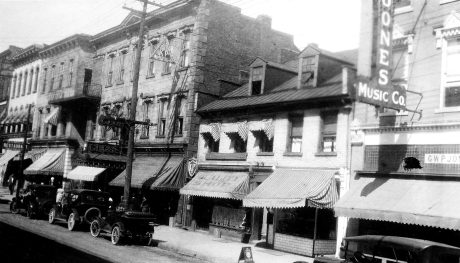
The photo showing the Globe Theater in Washington accompanying the second installment of “A Death in the Lyric” was taken by Earle Forrest. It is from a collection of his photos stored in 23 boxes in the Library and Archives division of the Heinz History Center in Pittsburgh.
Earle’s older brother, Daniel B. Forrest, is a key figure in the Lyric serial. The two were, however, as different as night and day.
“From the exciting day in April 1898 when, as a 15-year-old messenger boy for Western Union, he delivered an important telegram to Col. AL. Hawkins (ordering the 110th Infantry to the Philippines), until his death 71 years later, life was one grand and glorious adventure,” wrote Harriet Branton in the Observer-Reporter in 1980. “Whether he was living history or writing it, it was with uncommon zest that he took part in exciting events and wrote about them with infectious enthusiasm which entertained two generations of readers.”
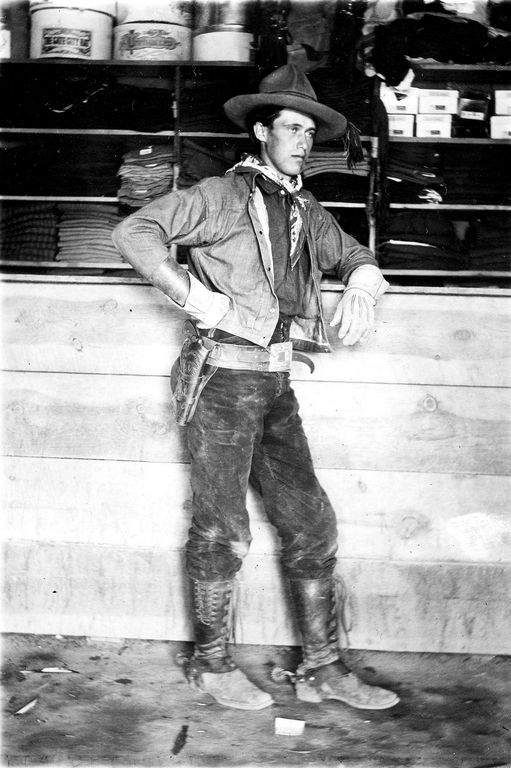
Earle Robert Forrest was born in 1883, graduated from Washington High School and, eventually, Washington & Jefferson College, but not before taking several jobs locally and on cattle ranches in the West, which he loved with all his heart. He punched cows from Montana to Mexico and was the first person to photograph many of the dances and rituals of the Hopi and Navajo.
He settled down in 1920 to a career as a writer for The Reporter and authored a history of Washington County.
Forrest died in 1969. His gravestone in Washington Cemetery reads, “He who is without knowledge of the past has missed one of life’s great pleasures.”
Gambling was illegal as well, but townspeople didn’t have to look far for a poker game. Prostitution was rampant. The Washington Observer reported in 1907 that it counted 40 brothels, speakeasies and gambling houses in just one ward of the borough.
Washington’s residents spent their money on legitimate entertainment, too. The Opera House occupied the top floor of Town Hall, located where the county courthouse is now and moved in 1899 to Brownson Avenue. The Lyric Theatre, which could accommodate much larger stage productions, opened on North Main Street that same year. It was conceived and erected by W.D. Roberts and brothers Joshua and Robert Forrest, all prominent local businessmen. The Lyric opened in October with “The Highwayman,” a popular musical comedy of the day.
Lavish productions attracted the finest of Washington’s citizenry, but less respectable shows also took the stage. Several years into the 20th century, talk began to circulate about the Lyric Theatre’s clientele. Young, attractive women with questionable reputations were rumored to be receiving free tickets and hooking up with seedy male patrons.
Some clergymen began referring to the borough as a cesspool. They preached that beer parties and drugs were luring children away from families. Police claimed they had no legal power to raid illegal establishments, but everyone else claimed the police were paid by the brothel and bar owners to protect them.
Disgust grew and then gave way to shock when the events of the morning of Feb. 3, 1907, became known. The Lyric – or more specifically a bedroom above its box office – would capture the community’s attention, fascinate and sicken it and, finally, move it to action.