

Notice: Undefined variable: paywall_console_msg in /usr/web/cs-washington.ogdennews.com/wp-content/themes/News_Core_2023_WashCluster/includes/single/single_post_meta_query.php on line 71
Notice: Undefined offset: 0 in /usr/web/cs-washington.ogdennews.com/wp-content/themes/News_Core_2023_WashCluster/single.php on line 18
Notice: Trying to get property 'cat_ID' of non-object in /usr/web/cs-washington.ogdennews.com/wp-content/themes/News_Core_2023_WashCluster/single.php on line 18
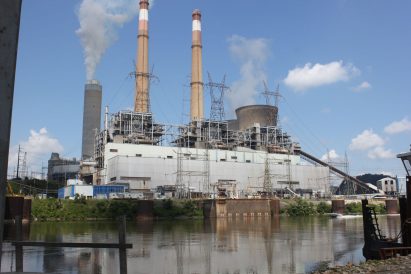
#1- FirstEnergy closes Hatfield’s Ferry Power Station
Notice: Undefined offset: 0 in /usr/web/cs-washington.ogdennews.com/wp-content/themes/News_Core_2023_WashCluster/includes/single/strategically_placed_photos_article.php on line 412
Notice: Trying to get property 'term_id' of non-object in /usr/web/cs-washington.ogdennews.com/wp-content/themes/News_Core_2023_WashCluster/includes/single/strategically_placed_photos_article.php on line 412
FirstEnergy Corp. announced in July that it would close its Hatfield’s Ferry Power Station in Monongahela Township, Greene County, and its Mitchell Power Station in Union Township, Washington County, by the end of October.
The company cited the weak demand for electricity, low electricity prices and the costs of bringing the two plants into compliance with environmental regulations.
The closings of the two coal-fired plants resulted in the layoff of 380 employees and shocked many in the community.
The capacity of the plants, 2,080 megawatts, represented about 10 percent of FirstEnergy’s total generating capacity. In addition, only four years earlier, FirstEnergy’s predecessor, Allegheny Power, had invested $650 million in Hatfield’s Ferry to install scrubbers to remove sulfur dioxide and mercury from its emissions.
Local state elected officials organized several hearings, citing concerns not only for the loss of jobs but also the impact the closings might have on the reliability of electrical services.
FirstEnergy Generation President James Lash, testifying at one hearing, said that for several years the company had been faced with a weak demand for power and market prices at “historic lows,” partly as a result of the abundance of natural gas.
An investment of more than $270 million would be needed to bring the plants into compliance with Mercury and Air Toxics Standards that took effect in 2015, and new emission standards were on the horizon, he said. But even if environmental regulations were removed from the equation, Lash said, the plants remained “uneconomical.”
The plant closings were subject to review by PJM Interconnection, which ensures the reliability of the electrical grid. PJM completed its analysis and concluded no system reliability problems would result from the plant closings.
On Oct. 18, the company laid off 110 plant employees, keeping 78 on until December to complete final shutdown activities.
In October, company officials said 60 employees had been reassigned to other operations. However, none of the reassigned workers were members of the Utility Workers Union of America, which was then negotiating a company-wide contract with the company.