

Notice: Undefined variable: paywall_console_msg in /usr/web/cs-washington.ogdennews.com/wp-content/themes/News_Core_2023_WashCluster/includes/single/single_post_meta_query.php on line 71
Notice: Undefined offset: 0 in /usr/web/cs-washington.ogdennews.com/wp-content/themes/News_Core_2023_WashCluster/single.php on line 18
Notice: Trying to get property 'cat_ID' of non-object in /usr/web/cs-washington.ogdennews.com/wp-content/themes/News_Core_2023_WashCluster/single.php on line 18
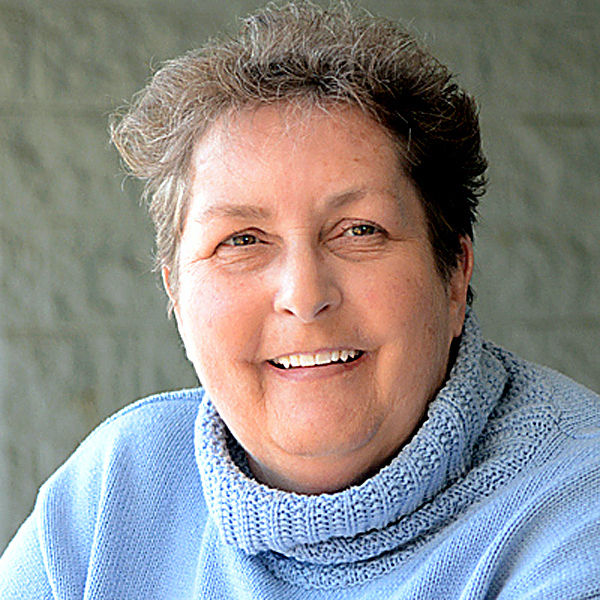
October is Breast Cancer Awareness Month and Almanac staff writer Terri T. Johnson is sharing her story of her battle with breast cancer.

Notice: Undefined offset: 0 in /usr/web/cs-washington.ogdennews.com/wp-content/themes/News_Core_2023_WashCluster/includes/single/strategically_placed_photos_article.php on line 412
Notice: Trying to get property 'term_id' of non-object in /usr/web/cs-washington.ogdennews.com/wp-content/themes/News_Core_2023_WashCluster/includes/single/strategically_placed_photos_article.php on line 412
By Terri T. Johnson
Staff writer
newsroom@observer-reporter.com
Deep in my gut, I knew something was wrong, terribly wrong. On what should have been one of the happiest days of my life, the overwhelming feeling of dread saturated my being.
The date was Dec. 14, 2007. I’ll never forget. The day and feeling remain burned in my brain even after nearly six years. It was my daughter’s birthday and I was to have lunch with her and her 1-week-old daughter, my first grandchild. Life was good. All that was needed was for the surgeon to reassure me that the tumor he had removed from my left breast four days before was benign and I was out the door and off to lunch.
As the minutes passed, I knew something was about to happen that would forever change my life. Patients with appointments after me were gone. I was alone in a sterile room wearing an ill-fitting paper gown and all I wanted to do was to scream. The sound of the heating system hissed from the ceiling vent. I can still remember staring at the slats in the window blinds because there was nothing else to look at as I’d already read all of the diplomas on the wall. I needed to run, to cover my ears and eyes and pretend everything was right with the world.
But I couldn’t make myself move.
The exam room door opened, and the surgeon walked in. I could tell by the look on his face the news would shatter my world.
Breast cancer runs in my father’s side of the family. I watched my grandmother and two aunts die from the disease, one each decade beginning in the 1960s. The fear of developing it was always in the back of my mind, so I was faithful when it came to having a mammogram and doing self-examinations. I’d sit fitfully in the mammogram suite once a year until the technician returned and said everything looked good. Then it was off again for a blissful year of “I’m fine.”
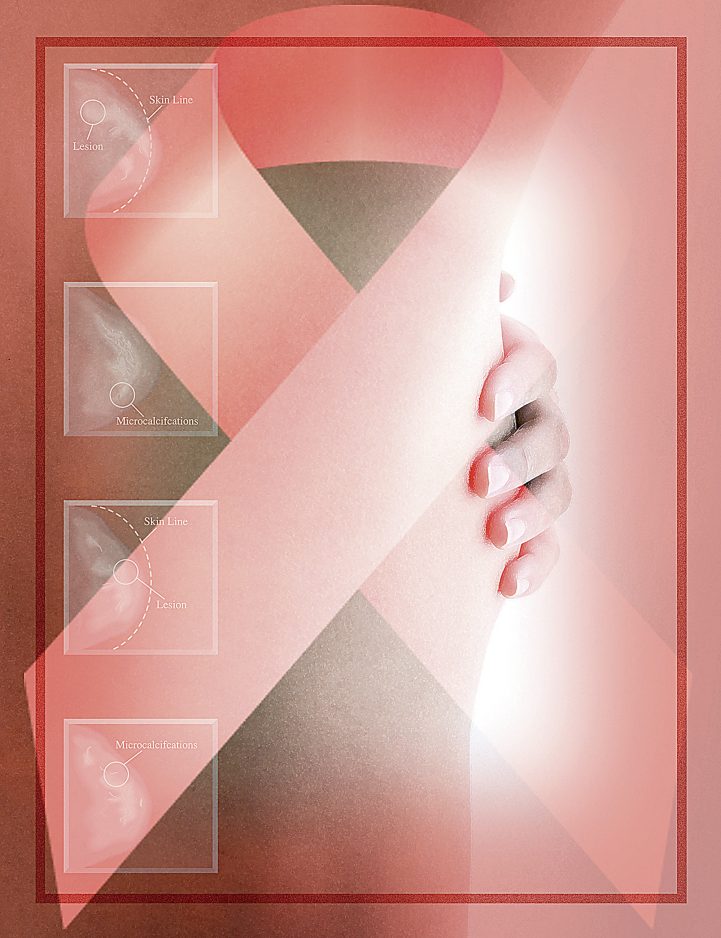
But in the fall of 2007, the mammogram detected a white star-shaped blip far back near the chest wall – so far back a self-exam was useless. Just nothing, I kept telling myself. Just nothing. But to be sure, I decided to have a lumpectomy.
The results were disastrous. That small, white, innocuous-looking mark on the mammogram was malignant and, if left inside my breast, could kill me.
I don’t remember if the surgeon, Dr. Eugene Hammell, ever said the word malignant. I couldn’t hear him even though I could see his mouth moving. He sat down in front me and was speaking in sentences, but I couldn’t hear him. I couldn’t hear him no matter how hard I concentrated. I couldn’t get the image of my dying grandmother and aunts out of my brain, and I was trying to absorb the reality that I was probably going to be the next to die.
I do remember that Hammell said I would be in control until I got to my car in the parking lot and then I’d cry. I only made it to the empty waiting room, then burst into tears. His receptionist held me in her arms.
Hammell purposely had me wait until all of his patients were gone so I could be alone. Both were caring gestures, but all I could think of was that I was going to die, and my granddaughter was only a week old, and she would never remember me, and I didn’t want to die. I didn’t want to die.
In the car, I called my daughter screaming to the point she couldn’t understand what I was saying. I drove to her house, but I can’t remember how I got there. I called my boss, crying hysterically, to say I’d need time off.
The rest of the day I kept holding my baby granddaughter, but never near my left breast, as if to shield her from the malignancy.
For two days, I did nothing but cry. On the third day, I awakened, sat up in bed and said out loud, “I’m not going to die. I refuse to die. I have too much to do and too many places to go.”
Call it an epiphany, but then and there I decided I was definitely not going to die.
A few days later, I was back on the operating table at Canonsburg General Hospital, where Hammell, the same surgeon who removed the tumor, extracted numerous lymph nodes to determine if the cancer had spread. The day after Christmas, I learned the malignancy was confined to the tumor. It was the best Christmas present ever.
Then the real work began.
Merely removing the tumor and, as was done then, some vital lymph nodes, did not mark the end of treatment. Hammell ordered a long list of tests, some with nuclear isotypes, and referred me to his friend, Dr. Stanley Marks at the Hillman Cancer Center in Pittsburgh.
Just after the new year, I, once again, found myself in an ill-fitting paper gown alone in a sterile exam in the cancer center. It’s a soothing place, highly organized where the employees are caring and compassionate. It’s also a place where many of the people sitting in chairs, walking past or being pushed in wheelchairs are going to lose the battle to cancer, some sooner than later.
Obituaries often state the deceased died after a long, courageous battle with cancer. It is, indeed, a battle, and Marks is one of the best to lead the charge. He doesn’t mince words, but speaks in soft tones, frequently to many of his patients who will not win the battle. More tests were ordered and additional appointments were set up. I was on a six-month odyssey that would feel like six decades.
I struggled each day to get out of bed and dress for work. I never missed a day after the initial surgeries. Then came radiation.
Every day for 33 days, I would get up from my desk at work and drive to UPMC cancer center at Washington Hospital, where a direct beam of radiation was blasted into my breast. Thirty minutes later, I was back at my desk. Toward the end of the treatments, I went to bed at 7:30 p.m. so I could function at work the next day. There was nothing in my life but work and sleep.
The skin fell in sheets from my breast toward the end of the treatments. I couldn’t move without the pain piercing my rare flesh. Dr. Mark Seraly, my dermatologist, helped me by supplying radiation cream. Friends called, sent cards and offered to bring me prepared meals.
I just wanted it all to be over. But even when the radiation treatments ended and subsequent mammograms found no trace of a tumor, up cropped the next problem. One of the tests before radiation detected a growth in my thyroid. Six days after my last radiation treatment, I was back in the operating room having half of my throat out. By this time, I was numb and tired and ready to cry at any moment.
The news was good: The thyroid tumor was benign. Life could begin again.
I sill go for annual mammograms and see Marks each December. For anyone who can hear me, I shout, often at inopportune times, “Get a mammogram.” If I had skipped even one year, I would most likely be dead now. Instead, my granddaughter is in kindergarten and my grandson was born less than two years after my diagnosis. I am glad I got to know them. I remain a realist. Cancer is a big part of my father’s family. He and a brother died of cancer, along with his sisters and mother. So, each and every year, I have a mammogram. Not exactly pleasant, but it beats dying.
Someday, I expect cancer will win and I will become another statistic. But not today.
I have too much to do.