

Notice: Undefined offset: 0 in /usr/web/cs-washington.ogdennews.com/wp-content/themes/News_Core_2023_WashCluster/includes/single/single_post_meta_query.php on line 43
Notice: Trying to get property 'paywall' of non-object in /usr/web/cs-washington.ogdennews.com/wp-content/themes/News_Core_2023_WashCluster/includes/single/single_post_meta_query.php on line 43
103-year-old woman has battled Alzheimer’s for decades
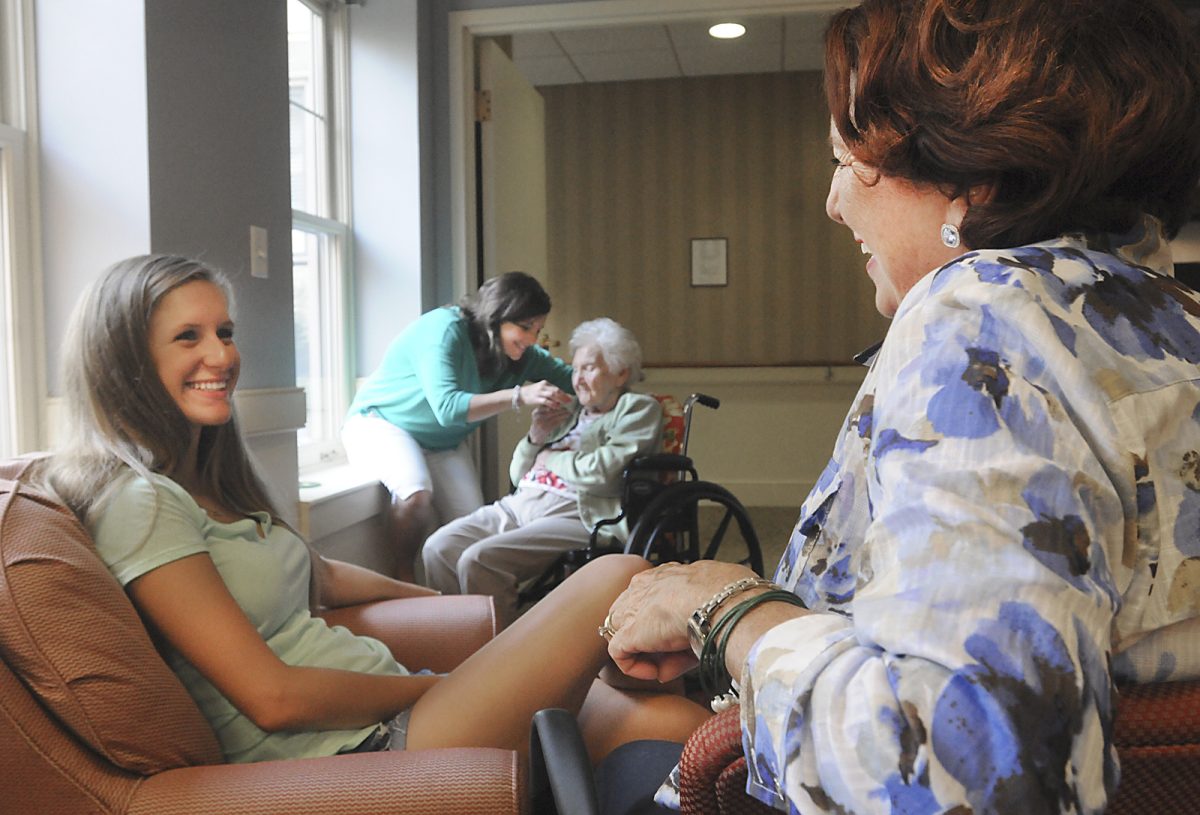
Gina Iuliucci spends time with her grandmother, Maria Lacey, while her daughter, Ava Iuliucci, left, and Sharon Angeloni relax at Woodside, part of Presbyterian SeniorCare, in North Franklin Township.
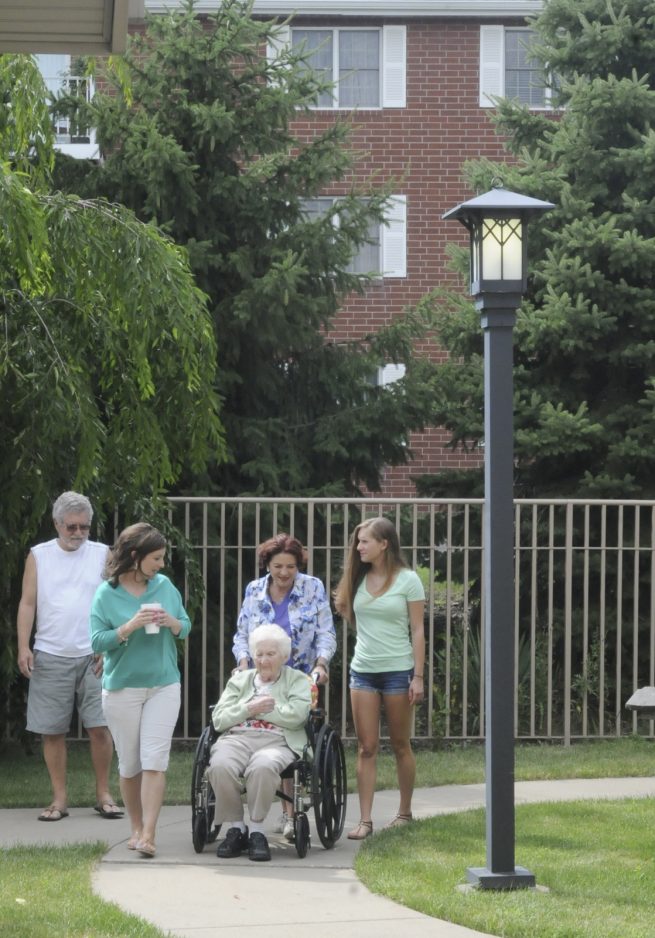
From left, Thomas Angeloni, Gina Iuliucci, Sharon Angeloni and Ava Iuliucci accompany Maria Lacey on a stroll around the garden at Woodside.
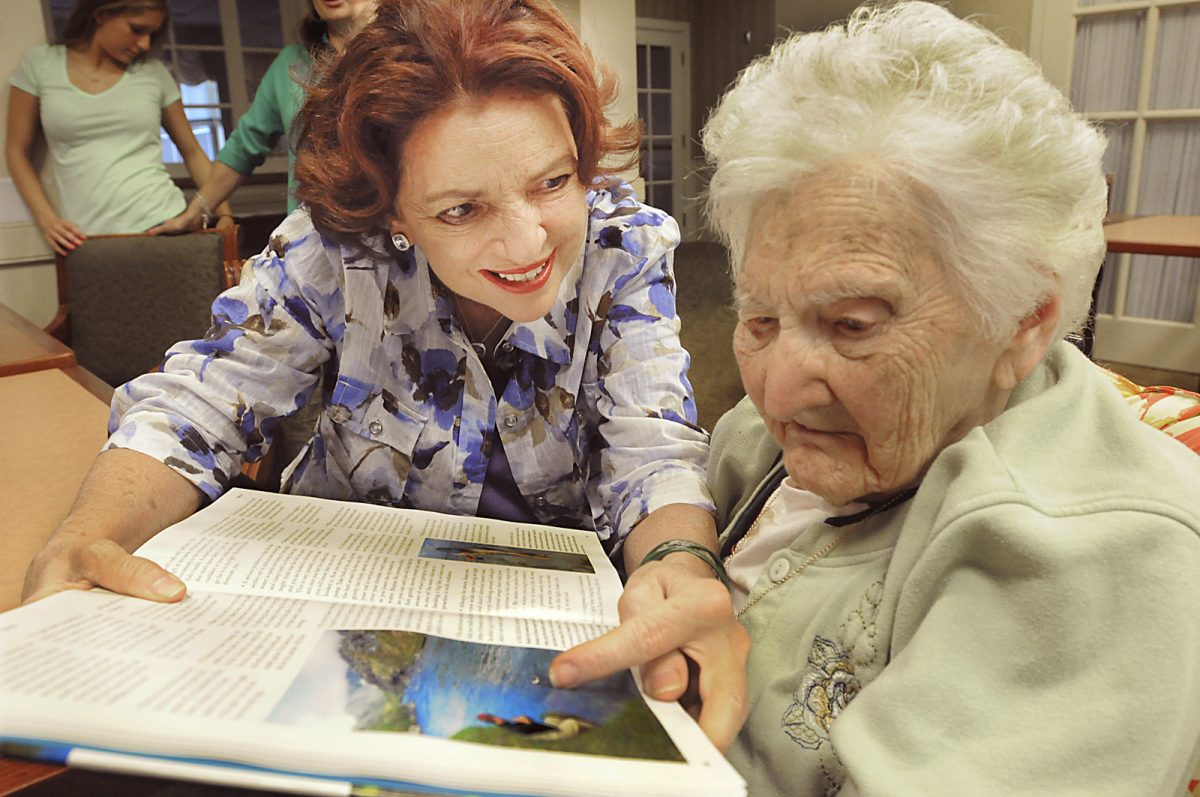
Sharon Angeloni, left, of Washington, shows her mother, Maria Lacey, photos in a book.
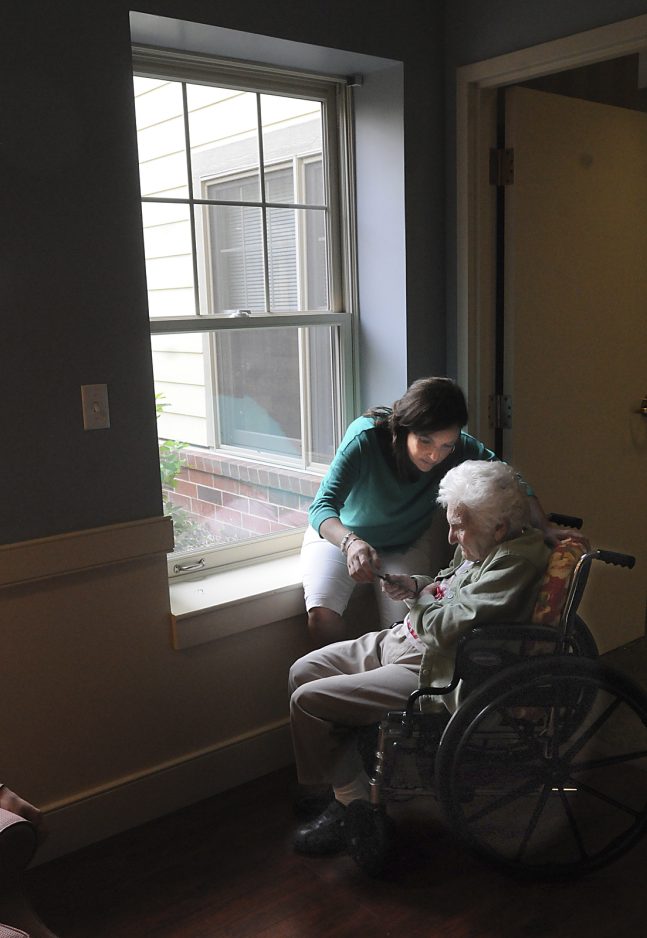
Gina Iuliulcci shares a quiet moment with her grandmother, Maria Lacey.
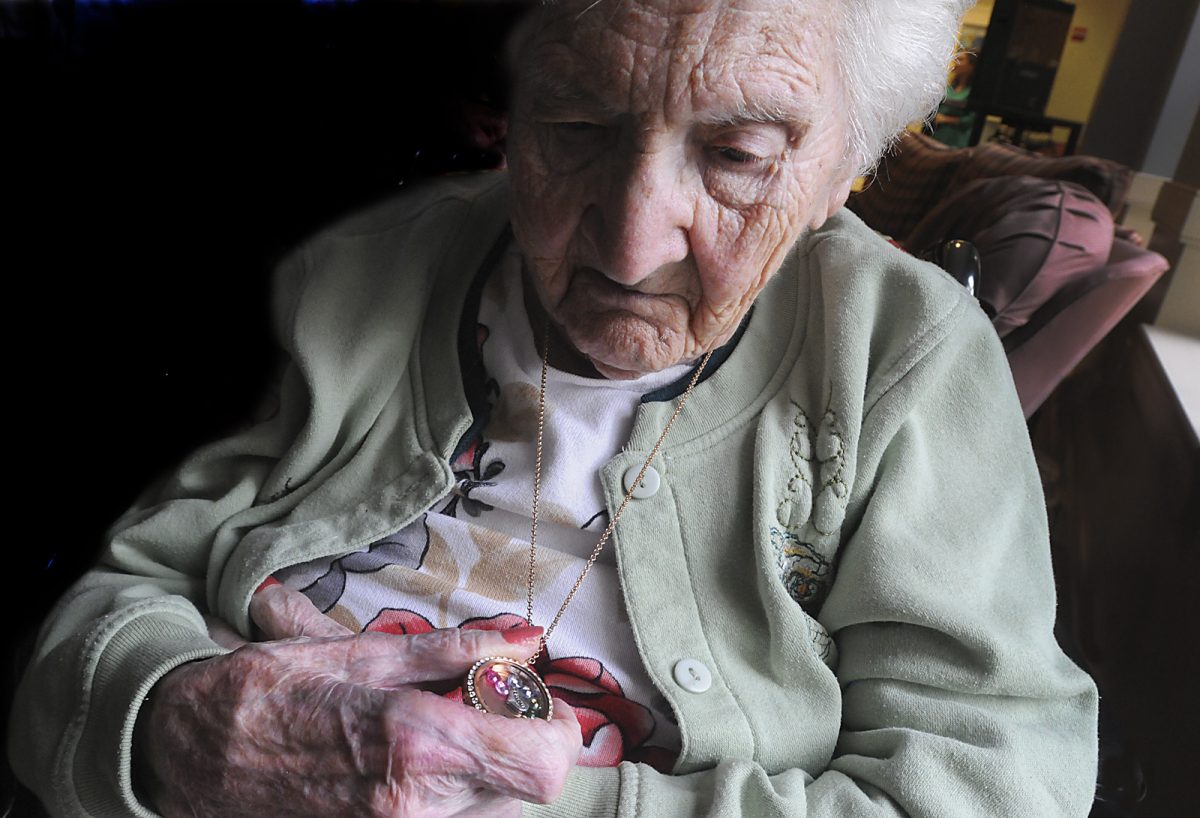
Maria Lacey holds a pendant that contains the birthstones of her daughters and five grandchildren.
Maria Lacey refuses to act her age, and for her family, that is a blessing.
When Lacey went to Presbyterian SeniorCare in Washington for a respite day at the age of 100, she complained, “I don’t want to just sit around with all these old people waiting to die.”
Her feisty spirit is partly what has kept her alive so long, according to her family. Lacey, who turns 103 in October, now resides at Presbyterian SeniorCare. She is the oldest resident at Woodside, the Alzheimer’s unit at Southminister Place, and also had perhaps the longest battle against Alzheimer’s – about 20 years living with the debilitating disease.
“I think the feistier they are, the longer they live,” said Sharon Angeloni, Lacey’s daughter. “They fight.”
Lacey, originally from Pittsburgh, was still fairly active and chatty until recently. She sang and talked incessantly, sometimes for 48 hours without pause, and went everywhere with her two daughters, Angeloni and Rose Murgidi. She even went to Disney World at the age of 101.
Her daughters were her primary caretakers until last fall, when Lacey started to decline more rapidly, both physically and mentally. They decided to take her to Woodside, where she now has around-the-clock care.
Angeloni, 67, said that she and Murgidi, 65, never wanted to put their mother in a nursing home, but it “just got to be too much” for them to manage.
“We’re both senior citizens trying to take care of an elderly person, and my sister said, ‘Mom’s going to outlast us,'” Angeloni said.
For years, Angeloni and her husband, Tom, took care of Lacey at their home in New Jersey, near Philadelphia. When the brutal winters made it too difficult to take Lacey everywhere with Angeloni, the two sisters made a bold decision.
They bought a house for their mother in Leesburg, Fla., seven doors down from Murgidi’s home, because her house did not have a spare bedroom. The warm weather, coupled with Florida’s high-quality senior care, made it an ideal location.
Every six weeks, the two sisters took turns moving into their mother’s house to care for her. Murgidi is a licensed practical nurse and needed caretakers to look after Lacey while she was working.
For Angeloni, a seamstress who worked from home, the arrangement meant leaving her family behind and flying to Florida a half-dozen times a year for seven years, until Lacey’s move into Woodside.
“I couldn’t go to the store without her. I couldn’t do anything without her,” Angeloni said. “Basically, she’s really part of our family, completely, like another child, and so we really rearranged our life for her.”
Both sisters agreed it was a big commitment, but it was definitely the right decision.
Lacey never wandered, a common symptom of Alzheimer’s, but she became more paranoid and attached to her daughters. They first noticed a change in Lacey when she suddenly forgot how to make pancakes.
Lacey was a good baker and an avid reader who could explain the scientific components of DNA and RNA, despite never advancing past eighth grade. She grew up poor on Penn Avenue in Pittsburgh and worked for Crown Cork & Seal before she married Bernard E. Lacey at age 32. He died about 20 years ago from a stroke, before Alzheimer’s took hold of his wife’s memory.
Murgidi said it was most upsetting when her mother forgot how to read because she was cognizant of her memory loss.
“I said, ‘Mom, hey, I don’t see you reading much anymore,’ and she looked at me and she said, ‘Rose, I read like a child. I say the words in my mind, but I don’t know what they mean,’ and it broke my heart.”
Lacey recently lost most of her ability to talk, although she can respond to simple questions and mimic a few phrases. She hums constantly, her way of communicating with loved ones.
During visits with her family, she clasps a pendant that holds the birthstones of her daughters and five grandchildren. It was a gift from Murgidi, and Angeloni brings it with her each time she visits, then takes it home so it won’t get lost.
Lacey is fortunate to have a granddaughter with her almost every day. Gina Iuliucci, 46, plans activities at Woodside and has a background in music therapy.
Iuliucci said her grandmother’s case is unusual because she was still able to hold a conversation and function fairly independently until recently.
“You see one person with Alzheimer’s, and you’ve only seen one person with Alzheimer’s because it can manifest so differently in every person,” Iuliucci said. “The fact that she’s been verbal, even at this point, for so long is not so common.”
They believe the fact that Lacey was treated as a valued member of the family – one who was brought along to every graduation, restaurant outing and party – has made all the difference.
“We never really thought of her as different,” Angeloni said. “It was all worth it, and I think that’s why she lived so long because she was really active, and really a part of us.”
“I think she just only knew how to keep on going,” Murgidi said. “She was, and still is, just amazing – a miracle.”