

Notice: Undefined offset: 0 in /usr/web/cs-washington.ogdennews.com/wp-content/themes/News_Core_2023_WashCluster/includes/single/single_post_meta_query.php on line 43
Notice: Trying to get property 'paywall' of non-object in /usr/web/cs-washington.ogdennews.com/wp-content/themes/News_Core_2023_WashCluster/includes/single/single_post_meta_query.php on line 43
Washington man donates wife’s brain to science to give others hope
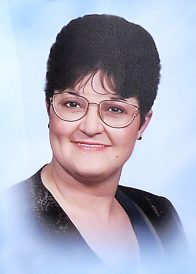
All Jay Briggs knew when his wife, Sandy, was diagnosed with frontotemporal dementia 10 years ago was that the prognosis was not good.
And even though it wasn’t easy, Jay cared for his junior high school sweetheart in the couple’s Washington home until Sandy’s death on March 2.
But his selfless devotion did not stop when Sandy died. Jay donated his wife’s brain to science, hoping that it could help spare others with the disease – and their loved ones – continued pain and suffering.
“The hard part was she was not going to get any better,” Jay said. “She was going to die. I could see it progressing. When we took her to the mall, she was not stopping. If you were in front of her, she would walk into you, or she’d step only on the black blocks. People would stare at her.”
Eventually, Sandy just quit walking. The disease also left Sandy mute for the last three years of her life, and she spent much of her time playing with stuffed animals.
The Alzheimer’s Disease Research Center at the University of Pittsburgh has not contacted Jay yet with any findings. He said he’s “kind of curious” to learn what, if anything, researchers have discovered, but he will wait patiently until he hears.
The couple’s sons, Brian and Jason, however, don’t talk much about their mother’s illness, and they have never been tested to determine if they are candidates for dementia. Brian checked into being tested, but opted against it, telling his father that he’ll worry about it if he begins to experience symptoms.
Jason, however, doesn’t want to get tested, even though his wife has encouraged him. He said if he would test positive, “I don’t want her to look over her shoulder all the time wondering when it’s going to happen.”
Dr. Eric McDade, who evaluated Sandy when she was referred to the Alzheimer’s Disease Research Center, has a keen interest in frontotemporal dementia, and in the ADRC’s fall 2011 Pathways publication wrote: “Next to Alzheimer’s dementia, FTD is the second most common neurodegenerative dementia in people under the age of 65.”
It was previously known as Pick’s disease and considered to be rare. Research during the last 20-plus years has greatly increased awareness, he wrote.
“The term FTD encompasses a number of disorders that when considered individually are rare, but as a whole, make up a significant percentage of persons between the ages of 40 and 70 with dementia,” he wrote. As opposed to Alzheimer’s, in which the memory center of the brain is initially affected, “memory is often spared early on in FTD.”
Instead, FTD affects other important groups: behavior, personality and emotion, and language. Behavioral symptoms are often the earliest and most persistent symptoms that develop – another pattern that is opposite in Alzheimer’s dementia.
Sandy displayed several of the most common symptoms of FTD, such as poor judgment and decision-making abilities, impulsive behaviors, rude or inappropriate behavior and restlessness, and Jay cited examples of several of those symptoms.
When the doctor told her she could no longer work, Sandy called Trinity High School, where she worked in the office, and merely said I quit. Jay called back to explain why.
When the couple, who would have celebrated their 40th anniversary on Oct. 16, went out to eat, Sandy usually told the waitress, “I didn’t order this,” when the food arrived.
It also took Jay three months to get the couple’s credit cards straightened out.
“Sandy was a QVC junkie. We had stuff on the front porch all the time,” said Jay, noting that he finally removed the credit cards from the home. But not even that curtailed Sandy’s spending spree. She had memorized every number and expiration date.
Sandy’s erratic behavior and nasty outbursts were especially frustrating, Jay said, because of the couple’s grandchildren. It’s sad to think that’s “the impression they have of their grandmother.”
In the brain cells of those with FTD, there are two major types of abnormal brain proteins identified: tau tangles (also found in people with Alzheimer’s) and TDP-43 protein. To date, there are no treatments to halt or reverse FTD.
“Therefore,” McDade wrote, “treatment is based on targeting those symptoms that are most problematic and often requires both a neurologist and psychiatrist. A main focus of treatment is specific therapies targeted toward the pathological proteins. However, a large hurdle that must be overcome is identifying reliable indicators of one protein versus the other, because both lead to similar clinical symptoms of FTD.”