

Notice: Undefined variable: paywall_console_msg in /usr/web/cs-washington.ogdennews.com/wp-content/themes/News_Core_2023_WashCluster/includes/single/single_post_meta_query.php on line 71
Notice: Undefined offset: 0 in /usr/web/cs-washington.ogdennews.com/wp-content/themes/News_Core_2023_WashCluster/single.php on line 18
Notice: Trying to get property 'cat_ID' of non-object in /usr/web/cs-washington.ogdennews.com/wp-content/themes/News_Core_2023_WashCluster/single.php on line 18
New book explores Southwestern Pennsylvania’s coal region
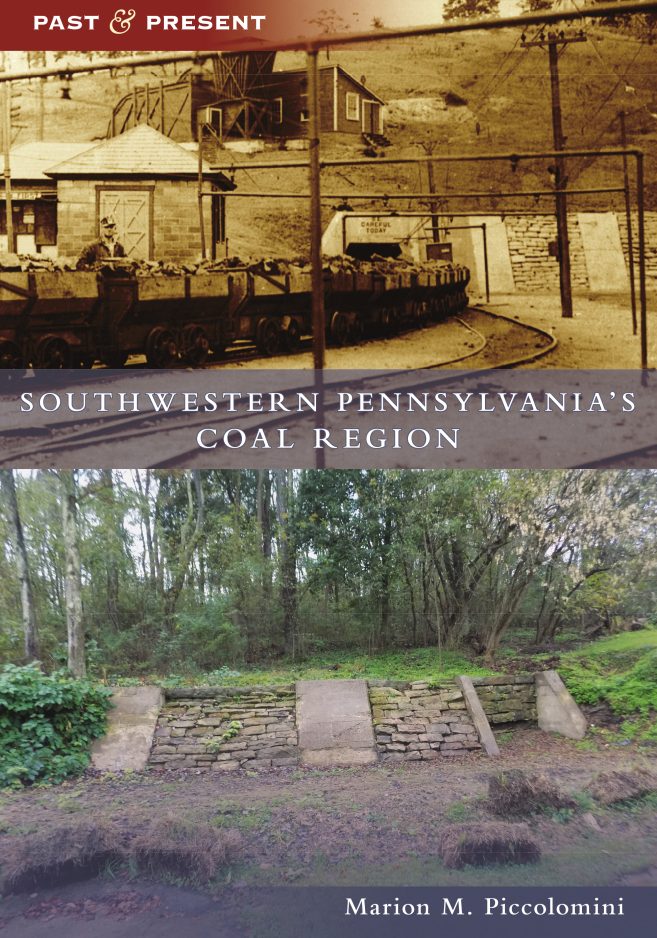
Reprinted from Southwestern Pennsylvania’s Coal Region by Marion M. Piccolomini
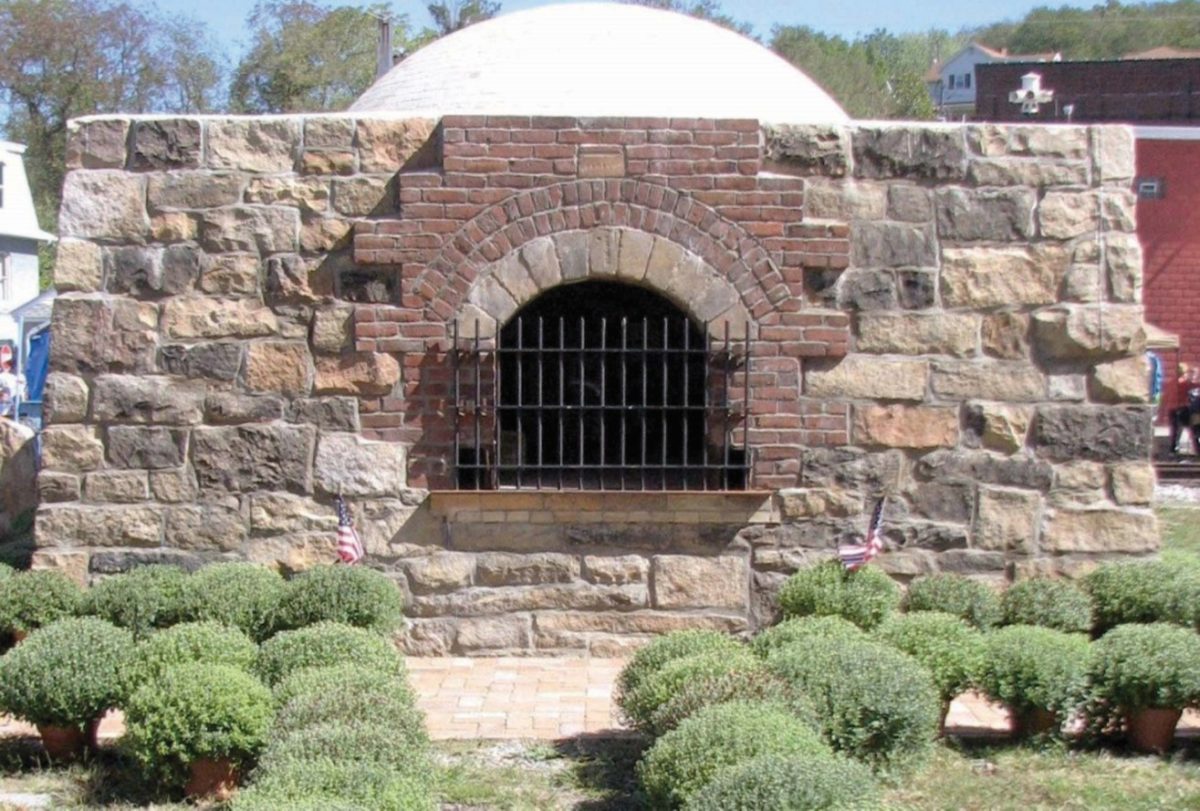
The Dunbar Historical Society coke oven. Reprinted from Southwestern Pennsylvania’s Coal Region by Marion M. Piccolomini
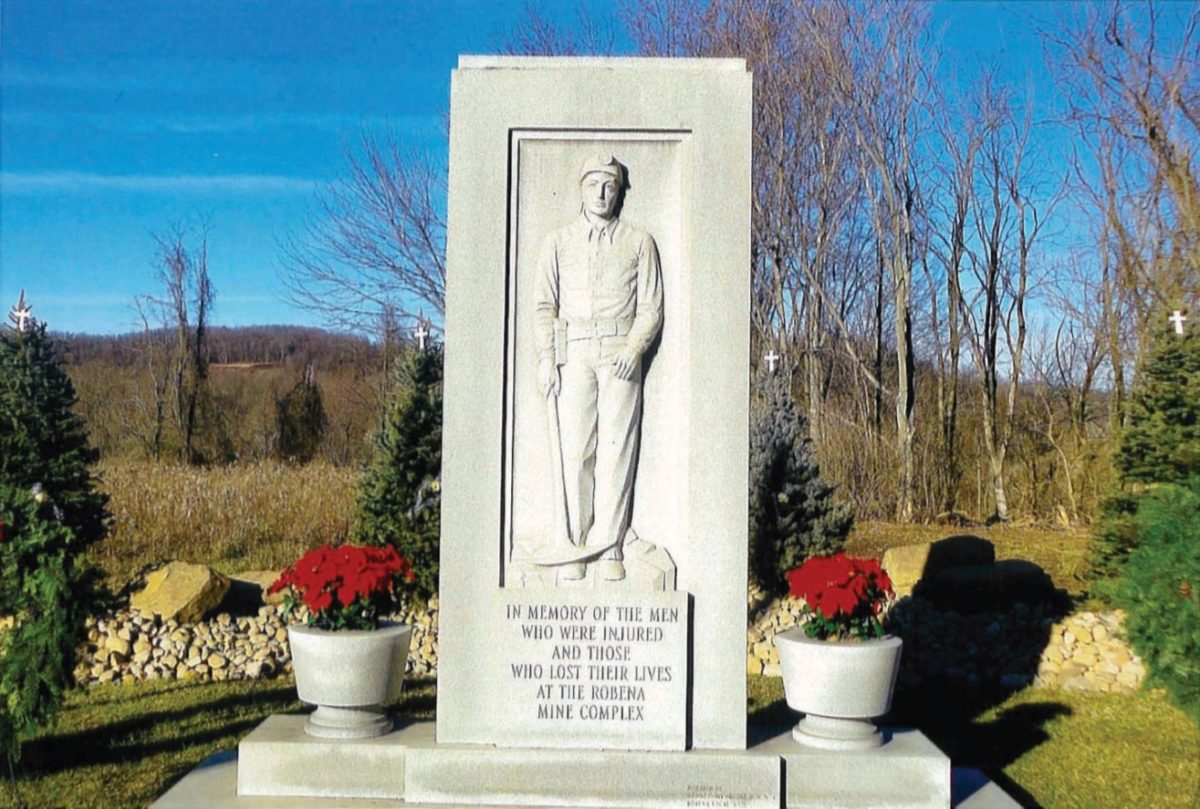
Robena Mine H.C. Frick Coke Company. Reprinted from Southwestern Pennsylvania’s Coal Region by Marion M. Piccolomini
Notice: Undefined offset: 0 in /usr/web/cs-washington.ogdennews.com/wp-content/themes/News_Core_2023_WashCluster/includes/single/strategically_placed_photos_article.php on line 412
Notice: Trying to get property 'term_id' of non-object in /usr/web/cs-washington.ogdennews.com/wp-content/themes/News_Core_2023_WashCluster/includes/single/strategically_placed_photos_article.php on line 412
While Marion M. Piccolomini grew up in Cardale, Fayette County, she said she was surrounded by friends, family and fellow students who either worked in the coal industry or were associated with it in some manner.
In her immediate family, her grandfather owned a couple of mines for a short period, but that was before she was born, and she doesn’t have much information about them.
Growing up in coal country, she said her parents would point out buildings and sites like area coke ovens, but she said she didn’t pay much attention to them at the time.
All that changed following her graduation from West Virginia University with a degree in child development, a master’s degree in speech pathology from Penn State and a move to the eastern side of the state in 1984.
In 2018, she rekindled her interest in her childhood home and began researching one of its major industries – coal mining. After a “long and fascinating nearly two-year journey,” a book she authored titled “Southwestern Pennsylvania’s Coal Region” is set to be released Feb. 24.
The 16-chapter book encompasses an area that includes Greene, Fayette, Washington, Allegheny, Westmoreland, Somerset and Indiana counties and includes 163 paired photos, showing what a site looked like in the past along with what it looks like now.
“Initially, I intended to write a local history on the coal and coke industry, but my publisher (Arcadia Publishing) suggested a collection of past and present photos,” Piccolomini said.
The goal was to provide visual interest rather than a simple narrative, partly to interest younger readers who may not be familiar with the relics of the coal industry.
The author collected old photos from numerous sources, such as universities, museum archives, foundations, local historical societies and the private collections of individuals. To accumulate photos from the present, she drove to Southwestern Pennsylvania about 20 times over a two-year period from her current home in Glenmoore, Chester County.
“I headed out every several months,” she said. “It was sometimes frustrating to see that the place I wanted to photograph was no longer there or was difficult to shoot from the same angle as the original.”
Piccolomini took most of the updated photos herself and others were from local organizations or foundations, businesses or private collections of family members and other individuals. During her visits to the western part of the state, she stayed with family or at a small condo she and her husband own in Farmington, Fayette County.
“Finding the ‘past’ images was a challenge, but getting the authorization to publish them was also an issue,” she said.
For Greene County content, she included a photo of Robena Mine, shown in 1940 along side an image of the current Robena Mine Disaster Memorial that sits along Route 21. Another entry, described as a bridge on the Mather Mine siding, is paired with a recent picture of the bridge that was contributed by a local resident.
“Some of the photos are process shots rather than a site,” she said. “For instance, the photo I used showing a man shoveling coal is contrasted with one that uses modern mechanical mining equipment to show how the industry has evolved.”
Photos from Washington County include one of the Vesta No. 4 mine buildings in Richeyville at peak production and another that shows the site after a 2002 renovation. Another pair from Washington County shows the company store and gas station in Daisytown in the 1950s along with another taken as part of Piccolomini’s recent researches.
A photo pairing from Fayette County shows the construction of Fayette Bank Building by J. V. Thompson, along with the current site called the Fayette Building and the former Thompson mansion, Oak Hill, shown next to a photo of Mount Saint Macrina, as the site is now called.
In nearby Dunbar, Piccolomini also includes a photo of the coke ovens along the Sheepskin Trail and the contemporary look of the now restored site.
“Getting the book ready for publication has been a long process, and I have no future plans at the moment to do another,” she said.
The author has one additional book to her credit titled “World War Two: Chester County.” The book evolved out of her participation as a volunteer and member of several local historical societies in Chester County, especially the Downingtown Area Historical Society. The book focuses on the home front, and one of the major research materials for the book was a newsletter sent to people in the military to keep them informed of local events and the corresponding letters sent by the service personnel back home to friends and relatives.
“Research for the book grew into an adventure across multiple counties,” Piccolomini said. “Along the journey, I met so many wonderful people, historical societies and organizations that shared pictures, stories and resources that made the book possible. I was also fortunate enough to have a family member join me on some of the trips.
“The experience was an unforgettable journey that gave me a deeper appreciation and respect for the history of the region,” she added. “I hope readers will enjoy the book as much as I enjoyed doing it.”